Introduction.
There are moments in life when everything feels unclear. You prayed, you waited, and still nothing seems to be moving. The doors you knocked on stayed shut. The relationships you invested in crumbled. The plans you made fell apart quietly, one by one.
And somewhere in the middle of all that confusion, you start to wonder: Is Allah even listening?
If you have ever felt that way, you are not alone. Millions of Muslims around the world carry that same silent heaviness, wondering whether they are drifting away from Allah or whether He has simply forgotten them.
But here is what so many people miss: sometimes the signs Allah is guiding you are not the ones you expect. They do not always arrive as sudden miracles or dramatic answers. Sometimes guidance comes as a quiet ache in your heart after a wrong choice. Sometimes it looks like a door closing firmly so that a better one can open. Sometimes it feels like loss before it feels like direction.
This article is for the person who is tired, spiritually confused, emotionally drained, or quietly longing to feel close to Allah again. We are going to walk through fifteen genuine, Quran-rooted signs that Allah is actively guiding your heart, even when life feels like it is standing still.
What Does Allah’s Guidance Really Mean in Islam?
In Islam, the concept of guidance is called Hidayah. It is one of the most profound gifts a person can receive, and it is entirely in Allah’s hands.
Hidayah does not simply mean knowing the rules of Islam or being born into a Muslim family. At its deepest level, it means that Allah turns your heart toward Him. It means that your soul begins to recognize what is true, what is good, and what leads you closer to your Creator.
“Indeed, Allah guides whom He wills to a straight path.” — Surah Al-Baqarah 2:213
The critical thing to understand is this: guidance does not always feel comfortable. In fact, some of the most profound moments of divine guidance in a person’s life come wrapped in difficulty, change, and discomfort.
Worldly success, money, and popularity are not signs of guidance. A person can have all three and still be spiritually lost. Real guidance is when your heart softens, your prayers become more meaningful, and your soul begins to ache for what is right.
So how do you recognize that? Let us walk through the signs.
15 Signs Allah Is Guiding You Toward Something Better.
1. You Start Feeling Guilty After Sins.
This is one of the most quietly beautiful signs, and most people miss it entirely.
When you do something wrong and you feel nothing, that numbness is a sign that the heart has grown distant from Allah. But when your heart stirs with discomfort after a sin, when you feel a pull back toward repentance and you cannot shake that unease, that is actually a mercy.
Allah says in the Quran: “Indeed, the soul is a persistent enjoiner of evil, except those upon which my Lord has mercy.” (Surah Yusuf 12:53). That internal tug you feel? That is the mercy. That is guidance whispering that you still have a conscience, and that Allah has not left your heart cold.
Do not ignore that guilt. It is a compass, not a punishment.
2. You Feel Pulled Toward Prayer Again.
You may have gone through a phase where Salah felt like a chore, or worse, where you skipped it entirely without much thought. But something has shifted recently.
Maybe you find yourself setting an alarm for Fajr again. Maybe the Adhan stirs something in you now that it did not before. Maybe you finish Salah and instead of rushing away, you sit for a moment, quietly, just wanting to stay in that space a little longer.
That pull is not accidental. Allah says: “Indeed, prayer prohibits immorality and wrongdoing, and the remembrance of Allah is greater.” (Surah Al-Ankabut 29:45). When Salah begins to feel like a need rather than an obligation, something is awakening in you. That awakening has a source, and it is not yourself.
3. Certain People Quietly Leave Your Life.
Few things hurt as much as losing someone you cared about. Whether it was a friendship that faded, a relationship that ended, or a group of people who simply drifted away, that kind of loss leaves a real mark.
But sometimes Allah removes people from your life not as punishment but as protection. People who were slowly pulling you toward your worst self, environments that were making it harder to pray, voices that were feeding your doubts, friends whose priorities had nothing to do with your spiritual health.
The space that opens up after someone leaves can feel lonely at first. But pay attention to what fills that space. Often, it is quieter. Often, it is cleaner. And often, closer to Allah.
4. Your Heart Finds Peace in the Quran.
There are people who read the Quran as a ritual and people who read it as a conversation. The difference between the two is something you can feel.
When a verse stops you mid-recitation because it feels like it was written for exactly where you are right now, that is not coincidence. When you recite Surah Ad-Duha and tears come because it sounds like Allah speaking directly to your exhaustion, that is guidance making itself known.
“Verily, in the remembrance of Allah do hearts find rest.” — Surah Ar-Ra’d 13:28
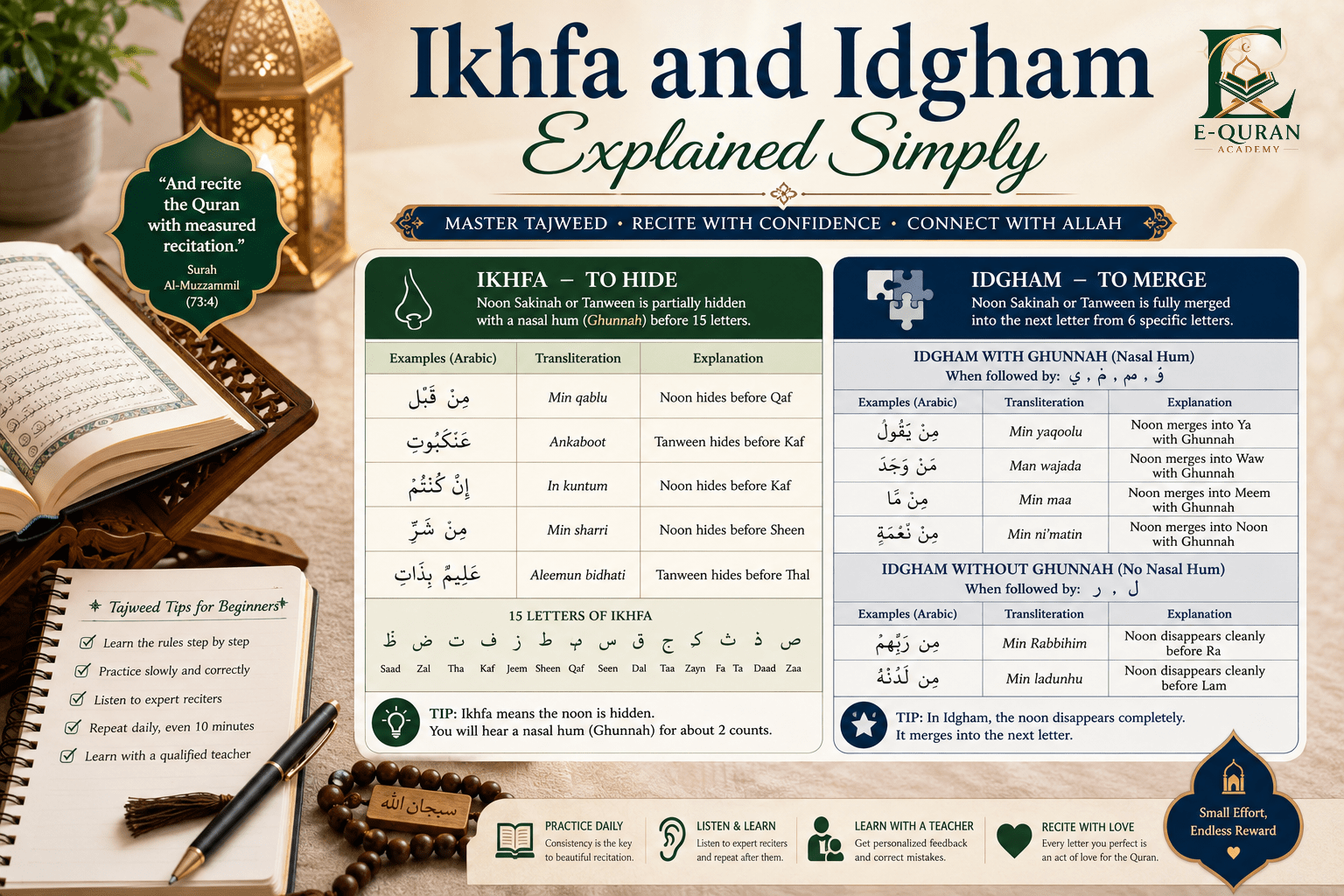
If you find that Quran recitation is bringing you a kind of peace that you cannot find anywhere else, lean into that. If you have not yet developed a consistent relationship with the Quran, online Quran classes with proper Tajweed can make that connection far deeper and more meaningful. At E Quran-Academy, students often share how learning to recite with Tajweed changes not just how they read but how they hear and feel the words. It transforms recitation from repetition into real communication.
5. Hardships Push You Closer to Allah.
Here is something that sounds strange until you experience it: sometimes the most painful chapters of life produce the most genuine closeness to Allah.
When everything is comfortable, we tend to coast. We pray, but not with urgency. We make dua, but not with desperation. We believe, but without depth. Then hardship arrives and it strips all of that away. Suddenly, the only place left to turn is Allah.
“And when My servants ask you concerning Me, indeed I am near. I respond to the invocation of the supplicant when he calls upon Me.” — Surah Al-Baqarah 2:186
The Prophet Muhammad (peace be upon him) said: “How wonderful is the affair of the believer, for his affairs are all good. If something good happens to him, he is thankful, and that is good for him. If something bad happens to him, he bears it with patience, and that is good for him.” (Sahih Muslim)
If hardship is making you reach for Allah more, not less, that is one of the clearest signs of guidance you will ever receive.
6. You Start Making More Dua.
There is a certain emotional honesty that comes with regular dua. You cannot make sincere dua while pretending everything is fine. You cannot cry to Allah in the night without acknowledging your need for Him.
When you notice that you are talking to Allah more, making dua in moments that are not just the official prayer times, calling on Him while driving or lying awake or working through something hard, that frequency is a sign. It means your heart is turning toward its source. And Allah loves that turning.
The Prophet (peace be upon him) said: “Dua is the essence of worship.” (Tirmidhi, and graded as authentic). A heart that craves connection through dua is a heart that is being guided toward that connection.
7. You Lose Interest in Certain Sins.
This one tends to happen so gradually that people almost do not notice it. Things that used to feel appealing start to feel hollow. Entertainment that used to consume hours begins to feel like a waste. Conversations that were once exciting now feel draining or purposeless.
That shift in what you find satisfying is not random. It reflects an internal change in values. The Prophet (peace be upon him) described the believer’s heart as being in constant motion between states, and one of the signs of a heart moving toward Allah is that it begins to feel genuine distaste for what distances it from Him.
You are not perfect, and you will still struggle. But the struggle itself, the fact that you are now fighting certain desires instead of embracing them, is a sign that something real is happening inside you.
8. You Begin Valuing Peace Over Attention.
Something changes when a person matures spiritually. The hunger for validation and attention that once drove many choices begins to quiet down. The need to be seen, praised, or admired loses its grip.
Instead, you start to crave stillness. You find yourself choosing a quiet evening over a loud gathering. You step back from social media not because you were told to but because the noise stops feeling worth it. You begin to prefer depth over performance, sincerity over impression.
This shift is significant. It means your sense of worth is beginning to relocate from the approval of people to something more internal, more connected to what Allah sees in you. That is a form of emotional healing, and it is rooted in growing tawakkul, the trust in Allah that gradually frees you from dependence on others.
9. You Feel Emotionally Uncomfortable After Missing Salah.
There was a time when missing a prayer was easy to rationalize. Life was busy. You were tired. You would make it up. There was no real sting.
But now something has changed. When you miss Salah, something in your day feels off. A subtle discomfort settles in, not dramatic guilt but a kind of incompleteness, like you are carrying something unfinished. That sensitivity is spiritual progress.
The scholars of Islam have said that the heart which feels pain at missing a prayer is a living heart. It is responsive. It is not numb. If you are at the stage where prayer has become something your day feels incomplete without, you are further along the path of guidance than you may realize.
10. Allah Opens Doors You Never Expected.
Sometimes you plan one thing and what arrives is entirely different but somehow better. A job you did not apply for. A friendship that came from a completely unexpected direction. An opportunity that appeared right after a disappointment.
This is not always dramatic. Sometimes it is small: a word of encouragement from a stranger at the right moment, a book that finds its way to you, a conversation that answers a question you had been silently carrying.
“And whoever relies upon Allah, then He is sufficient for him. Indeed, Allah will accomplish His purpose. Allah has already set for everything a decreed extent.” — Surah At-Talaq 65:3
When you look back at the timeline of your life and begin to notice how things aligned, especially in ways you could not have engineered yourself, that pattern is worth sitting with. Allah’s provision does not always come through the doors you knock on. Sometimes it comes through walls you never thought would open.
11. You Become More Patient During Difficult Times.
Patience in Islam is not gritted teeth and silence. Sabr is active. It is choosing to trust Allah’s timing even when your own emotions are screaming for resolution.
If you look back at yourself a year ago and realize that a situation that would have broken you then is one you are now navigating with more steadiness, that is not simply maturity. That is Allah strengthening something in you.
The Prophet Muhammad (peace be upon him) said: “No fatigue, nor disease, nor sorrow, nor sadness, nor hurt, nor distress befalls a Muslim, even if it were the prick he receives from a thorn, but that Allah expiates some of his sins for that.” (Bukhari and Muslim). Every hardship you are enduring with patience right now is counted. Every quiet moment of holding on is registered.
12. You Start Protecting Your Heart and Time.
There is a point in spiritual growth where you become more intentional. You begin to notice which environments leave you feeling closer to Allah and which ones pull you away. You become more careful about what you watch, what you listen to, which conversations you allow to take hours of your energy.
This is not about becoming rigid or antisocial. It is about recognizing that your spiritual health is something that requires protecting, just as your physical health does. When you start making those choices more deliberately, setting boundaries not out of arrogance but out of care for your relationship with Allah, you are demonstrating a level of self-awareness that is itself a form of guidance.
13. You Feel Hope Even During Pain.
This is perhaps one of the most defining signs of all, because hope during pain is not natural. It is given.
There is a difference between performing optimism and genuinely feeling a quiet trust beneath the grief. The first is exhausting. The second is sustaining. When you are in the middle of something difficult and yet you find that you still believe Allah has not abandoned you, when the sadness is real but the despair is not, that thread of hope is from Allah.
“Indeed, with hardship will be ease.” — Surah Ash-Sharh 94:6
This verse is not a vague consolation. It is a structural promise. The ease is not after the hardship. It is with it. Running alongside it. And if you can feel that even slightly, even just as a whisper of trust that you cannot quite explain, hold onto it. It is guidance holding onto you.
14. You Begin Reflecting Deeply on Life.
Spiritual awakenings rarely begin with certainty. They usually begin with questions. Why am I here? What is actually worth pursuing? What kind of person do I want to be before I die? What will I answer for on the Day of Judgment?
When those questions start surfacing seriously, not as anxious spiraling but as genuine seeking, that is a sign that your soul is awake. The Quran repeatedly calls people to reflect: “Do they not think about within themselves?” (Surah Ar-Rum 30:8). Reflection is itself an act of worship. It is one of the mechanisms through which Allah opens hearts.
15. You Secretly Want to Become a Better Muslim.
This one is important to sit with honestly.
Not the version of yourself that performs piety for others. Not the one that posts about faith online. The private version. The version that, in the quiet moments before sleep, genuinely wishes it prayed more, read more Quran, was kinder, was more grateful, was more sincere.
That inner wish, even if it has not fully translated into action yet, is not nothing. It is actually a seed. The Prophet (peace be upon him) said: “Actions are judged by their intentions.” (Bukhari and Muslim). An intention that is sincere, even if the practice is still catching up, is the beginning of real change.
If you want to be closer to Allah in your heart, even while struggling with the steps, you are already on the path. You are already being guided.
Why Allah Sometimes Guides People Through Hardship.
There is a pattern in Islamic history that appears again and again: the people closest to Allah went through some of the most difficult trials. The Prophets, the righteous scholars, the sincere believers across generations faced genuine suffering. And through that suffering, their closeness to Allah deepened in ways that comfort alone could never produce.
This is not cruelty. It is purposeful refinement.
“Do the people think that they will be left to say, ‘We believe’ and they will not be tried?” — Surah Al-Ankabut 29:2
Hardship clarifies. It reveals what you actually believe when belief is not easy. It removes the parts of your character that would not serve you in the long run. It strips away false reliances so that the only reliable refuge left is Allah Himself.
The Prophet (peace be upon him) said: “The greatest reward comes with the greatest trial. When Allah loves a people He tests them. Whoever accepts that wins His pleasure, and whoever is discontent with that earns His wrath.” (Ibn Majah, graded Hasan by Al-Albani).
So if you are in a difficult season right now, try not to read it as absence. It may very well be presence. Allah does not test the people He has abandoned. He tests the ones He is actively shaping.
How to Strengthen Allah’s Guidance in Your Life.
Recognizing the signs of guidance is one thing. Actively nurturing that connection is another. Here are some practical ways to stay open to what Allah is directing you toward:
- Pray all five Salah consistently, even when it is hard, even when it feels dry. Show up for Allah even when you are not feeling it. The feeling often follows the action.
- Make Quran recitation a daily habit. Even ten minutes of thoughtful, slow recitation has an effect on the heart that accumulates over time. If you want to go deeper, learning Quran with proper Tajweed through structured online Quran classes helps build a real and lasting relationship with the text.
- Make sincere dua, privately and vulnerably. Do not perform dua for anyone. Let it be between you and Allah alone.
- Make tawbah regularly. Repentance is not a sign of failure. It is a sign that your conscience is still alive. Regular tawbah keeps the channel between you and Allah open.
- Be intentional about your company. The people around you influence your spiritual state more than most people acknowledge. Seek people who remind you of Allah.
- Pursue Islamic knowledge. Understanding your deen more deeply builds conviction and softens the heart. Whether that is through local classes, online courses, or structured family Quran learning, knowledge is one of the most direct paths toward guidance.
- Avoid prolonged sin. Every sin creates a layer of distance. Consistent avoidance of major sins, and quick repentance when you slip, keeps that distance from growing.
- Practice sabr actively, not just as waiting. It means choosing to trust Allah’s wisdom in real time, even when emotions are pulling in another direction.
Mistakes People Make When Seeking Signs From Allah.
In the desire to feel guided, some people drift toward practices that have no foundation in Islam and can actually lead to spiritual confusion. Being aware of these pitfalls matters.
- Chasing superstitions: Believing that certain numbers, bird sightings, dreams, or random coincidences carry specific divine messages is not grounded in Islamic teaching. Signs of guidance in Islam are rooted in the condition of your heart, your relationship with prayer, and your internal movement toward or away from Allah.
- Dream obsession: While some dreams can carry meaning in Islam, becoming preoccupied with interpreting every dream as a divine sign, especially through unqualified sources, can become a distraction from real spiritual work.
- Following online spiritual claims blindly: Social media is full of content claiming to reveal spiritual secrets, special prayers with guaranteed results, or exclusive methods for gaining blessings. Authentic Islamic guidance comes from the Quran and the verified Sunnah of the Prophet (peace be upon him), not viral posts.
- Expecting instant answers to dua: The wisdom of delayed answers is itself a form of guidance. The Prophet (peace be upon him) taught us that dua is never wasted: it either grants what was asked, delays it for something better, or averts a harm. The expectation of instant results can make people give up before the best answer arrives.
- Neglecting Salah while seeking signs: Perhaps the most common mistake. People look everywhere for signs of guidance while neglecting the most direct and established channel of communication with Allah. Salah is not incidental to guidance. It is the mechanism through which guidance flows.
Simple Daily Habits That Bring You Closer to Allah.
Guidance does not only come in dramatic moments. Much of it is cultivated quietly, through what you do every ordinary day. A practical daily checklist:
- Pray Fajr on time and start the day in remembrance of Allah. The morning adhkar (morning remembrance) from the Sunnah are short, powerful, and set a spiritual tone for everything that follows.
- Read at least a few verses of the Quran with reflection, not just recitation. Ask yourself what the verses are saying to your current situation.
- Make gratitude a conscious practice. Before sleep, name three things that were gifts from Allah that day, even small ones. This trains the heart to notice blessings.
- Give even small amounts in charity regularly. Sadaqah softens the heart and, according to authentic Hadith, protects against harm.
- Guard your tongue and your screen time. Much of what distances people from inner peace today comes through what they consume and what they say.
- Make evening dua before sleep. Ask Allah sincerely for guidance, forgiveness, and ease. Go to sleep in a state of tawakkul.
- Seek one piece of Islamic knowledge each day, a verse, a Hadith, a small lesson. Cumulative learning builds a foundation that transforms how you see the world.
Final Thoughts.
If you made it this far, something in you was searching. And the very fact that you are searching is itself a sign.
Allah does not abandon sincere hearts. He may go quiet for a season. He may answer in a language you did not expect. He may guide you through a chapter of life that feels more like loss than direction. But He is not absent.
Guidance in Islam is not always loud. Sometimes it is the softest nudge: a verse that catches your breath, a prayer that makes you cry without knowing why, a moment of unexpected peace in the middle of chaos. Those moments are not coincidences. They are communications.
If you are struggling right now, spiritually or emotionally, know that you are not alone in that struggle. Millions of Muslims in every corner of the world are walking through seasons of doubt, disconnection, grief, and longing. The path back to Allah is never as long as it feels in those moments.
Take one small step today. One sincere prayer. One verse. One quiet conversation with Allah. That is enough to begin.
May Allah guide all of us to what is best, protect our hearts from what harms them, and make the path back to Him always feel possible. Ameen.
The main signs include: feeling guilty after wrongdoing, being pulled back toward Salah, finding peace in Quran recitation, making more sincere dua, losing interest in harmful habits, and feeling hope even during difficult times. These signs reflect internal changes that come from a softening and opening of the heart.
Spiritual guidance from Allah is recognized through the state of your heart rather than external events. When your conscience becomes more sensitive, your prayers more earnest, and your desire to be closer to Allah grows genuinely, these are strong indicators that guidance is active in your life.
Signs a dua is being answered include: finding peace after making it, unexpected doors opening, hardships easing, feeling a sense of reliance on Allah increasing, and sometimes receiving what you needed rather than exactly what you asked for. The Prophet (peace be upon him) taught that no sincere dua is ever lost.
Yes. In Islam, hardship is often one of the most profound vehicles of guidance. Trials remove false reliances, deepen sincerity, and build a closeness with Allah that comfort rarely produces. Many of the most spiritually mature Muslims describe their most difficult seasons as the turning points in their relationship with Allah.
Tawakkul is the complete trust and reliance on Allah after taking all reasonable steps. It is a direct result of recognizing Allah’s guidance in your life. When you genuinely believe that Allah is managing your affairs with wisdom and care, you are freed from anxiety and able to act with both effort and surrender.
Start with what is small and real. Pray even when it feels empty. Make dua even when the words feel hollow. Read even a few verses of Quran. Sincerity in those small acts, even without feeling, is often the starting point of renewed closeness. Allah responds to effort, not just emotion.
Absolutely. The door of tawbah (repentance) remains open as long as a person is alive. Allah says in the Quran: “Say: O My servants who have transgressed against themselves, do not despair of the mercy of Allah. Indeed, Allah forgives all sins.” (Surah Az-Zumar 39:53). No sin is too large for Allah’s forgiveness when the repentance is sincere.
In Islam, emotional healing is connected to spiritual healing. The Quran is described as a shifa (cure) for what is in the hearts. Practices like regular Salah, Quran recitation, dua, dhikr, repentance, and building good company are all vehicles through which Allah heals emotional pain at a level that external remedies cannot fully reach.
The Prophet (peace be upon him) said that the most severely tested people are the Prophets, then the righteous, then those closest to them. Tests from Allah are not punishments. They are tools of refinement. They deepen faith, purify character, expiate sins, and draw the believer into a more genuine and less performative relationship with their Creator.
Learning the Quran with proper Tajweed and understanding changes the relationship with the text from a ritual to a living conversation. When you understand what you are reciting and recite it correctly, the impact on the heart is different. Structured Quran learning, whether individually or as a family through programs like those offered at E Quran-Academy, builds a consistent and deepening connection that sustains spiritual growth over time.