Ramadan always leaves a mark on the heart. The long nights of prayer, the quiet mornings before suhoor, the feeling of discipline and closeness to Allah. Then the month ends, and for many Muslims, that spiritual rhythm quietly fades away too.
If you have ever felt that gap after Ramadan, you are not alone. Many Muslims search for a way to stay spiritually connected all year, not just for thirty days. This is exactly why the Sunnah of fasting on Mondays and Thursdays is such a gift. It is a small, manageable act of worship that keeps your heart tied to Allah every single week.
This guide walks you through the authentic evidence, the deep spiritual and practical benefits, and simple steps to start this beautiful Sunnah in your own life.
Why Did Prophet Muhammad ﷺ Fast on Mondays and Thursdays?
The Prophet ﷺ did not choose these two days randomly. There is real meaning behind them, rooted in authentic hadith.
Aisha (may Allah be pleased with her) reported that the Prophet ﷺ was eager and consistent in fasting on Monday and Thursday. This narration is recorded in Sunan al-Tirmidhi, Hadith 745, graded Hasan (fair) by Imam al-Tirmidhi.
There is also a beautiful reason tied specifically to Monday. Abu Qatada (may Allah be pleased with him) narrated that the Prophet ﷺ was asked about fasting on Mondays. He replied that it was the day he was born and the day revelation began coming down to him. This narration appears in Sahih Muslim, Book of Fasting.
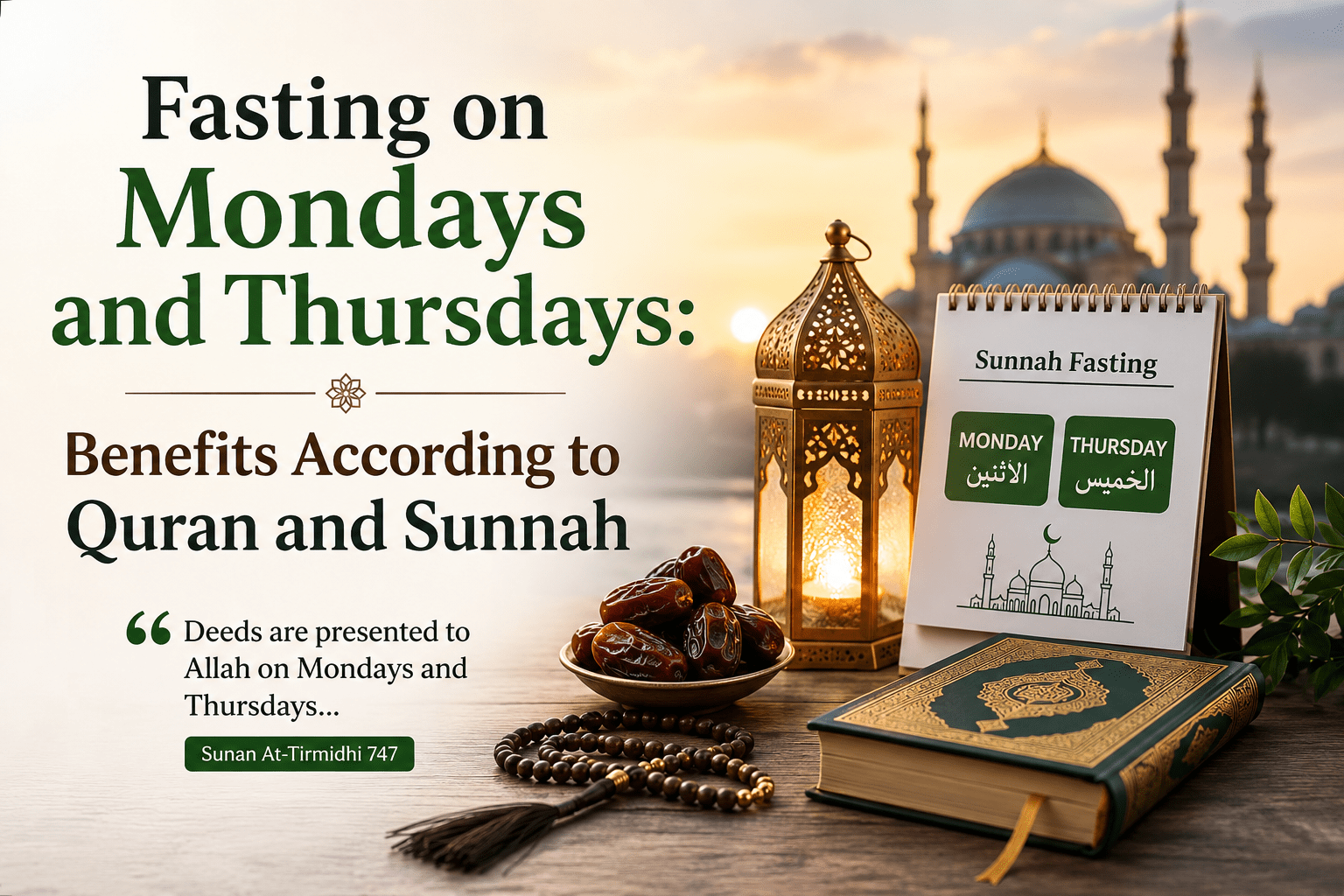
Then there is the reason connected to both days together. Abu Hurairah (may Allah be pleased with him) reported that the Messenger of Allah ﷺ said deeds are presented to Allah on Monday and Thursday, and he loved for his deeds to be presented while he was fasting. This is recorded in Sunan al-Tirmidhi, Hadith 747, graded Hasan Gharib.
Think about that for a moment. The Prophet ﷺ wanted the record of his good deeds to reach Allah while he was in a state of worship. That is the heart behind this Sunnah. It is not just about hunger or thirst. It is about timing your best self to meet Allah’s decree.
Benefits of Fasting on Mondays and Thursdays
Fasting twice a week might sound simple, but its effects run deep. Here is what this Sunnah can genuinely do for your spiritual life.
Strengthens Faith
Every time you choose to fast without anyone watching or expecting it from you, your iman gets a quiet boost. It is a private conversation between you and Allah.
Increases Taqwa
Allah tells us in the Quran that fasting was prescribed so that we may attain taqwa, or God consciousness. Weekly fasting keeps that awareness fresh instead of letting a whole year pass without it.
Develops Self Discipline
Skipping food and drink from dawn to sunset trains your willpower. That same discipline often spills into other areas of life, like waking up for Fajr or controlling your tongue.
Controls Desires
Fasting is one of the most direct ways to master the nafs. When you can say no to something as basic as food, saying no to sin becomes a little easier too.
Brings Consistency in Worship
Allah loves deeds that are done regularly, even if they are small. A weekly fast builds a rhythm of worship that does not depend on motivation or mood.
Prepares the Heart for Ramadan
Muslims who fast Mondays and Thursdays throughout the year often find Ramadan far less difficult. Their body and soul are already used to the discipline.
Improves Gratitude
Feeling hunger, even briefly, reminds you of the food and water so many people lack. It naturally deepens gratitude for what you have.
Encourages Patience
Sabr is built through practice, not theory. A fasting day is a live lesson in patience from morning until iftar.
Creates a Stronger Connection with Allah
Every hunger pang becomes a reminder of your intention. Throughout the day, your mind keeps returning to Allah, even during ordinary tasks.
Improves Spiritual Focus
Many Muslims report that fasting days feel mentally clearer. Without the constant cycle of eating, there is more room for dhikr, Quran recitation, and reflection.
Picture a working professional who fasts every Thursday. By mid-afternoon, instead of reaching for a snack, they pause for a few minutes of dhikr. Over months, that small habit reshapes their entire relationship with worship.
Quran Verses Related to Voluntary Fasting
The Quran lays the foundation for why fasting matters so deeply in Islam.
Arabic: يَا أَيُّهَا الَّذِينَ آمَنُوا كُتِبَ عَلَيْكُمُ الصِّيَامُ كَمَا كُتِبَ عَلَى الَّذِينَ مِن قَبْلِكُمْ لَعَلَّكُمْ تَتَّقُونَ
Translation: “O you who have believed, decreed upon you is fasting as it was decreed upon those before you that you may become righteous.”
Surah Al-Baqarah, Ayah 183
Lesson: The core purpose of fasting is taqwa. Voluntary fasts like Monday and Thursday extend that purpose beyond Ramadan, keeping God consciousness alive year-round.
Arabic: وَأَن تَصُومُوا خَيْرٌ لَّكُمْ إِن كُنتُمْ تَعْلَمُونَ
Translation: “But to fast is better for you, if you only knew.”
Surah Al-Baqarah, Ayah 184
Lesson: Allah reminds us that fasting carries hidden benefits, spiritual and otherwise, that we may not fully grasp until we experience them ourselves.
Arabic: إِنَّ الْمُسْلِمِينَ وَالْمُسْلِمَاتِ … وَالصَّائِمِينَ وَالصَّائِمَاتِ … أَعَدَّ اللَّهُ لَهُم مَّغْفِرَةً وَأَجْرًا عَظِيمًا
Translation: “Indeed, the Muslim men and Muslim women… the fasting men and fasting women… Allah has prepared for them forgiveness and a great reward.”
Surah Al-Ahzab, Ayah 35
Lesson: Fasting men and women are named specifically among those Allah promises forgiveness and immense reward, showing how highly voluntary fasting is valued.
Authentic Hadith About Monday and Thursday Fasting
Here are the core narrations scholars rely on for this Sunnah, along with their grading.
Collection: Sunan al-Tirmidhi Hadith Number: 745 Authenticity: Hasan (fair), graded by Imam al-Tirmidhi Explanation:
Aisha (may Allah be pleased with her) said the Prophet ﷺ made a habit of seeking out Monday and Thursday for fasting, showing this was his regular practice, not an occasional act.
Collection: Sunan al-Tirmidhi Hadith Number: 747 Authenticity: Hasan Gharib, also declared authentic by Sheikh al-Albani
Explanation: Abu Hurairah (may Allah be pleased with him) narrated that deeds are presented to Allah on these two days, and the Prophet ﷺ preferred to be fasting when that happened.
Scholars note there is a difference of opinion on whether one should fast every single Monday specifically because of the birth and revelation narration, or whether the general practice of fasting both days for the “deeds presented” reason is sufficient. Both views are respected within the Sunnah tradition, and either intention is valid.
Health and Spiritual Benefits
Islamic teachings never present fasting as a diet plan. The purpose is worship, not weight loss. That said, many Muslims naturally notice some general wellbeing effects during a fasting day, such as more mindful eating and a break from constant snacking.
It is important to separate these general observations from medical advice. Islam does not claim fasting cures illness, and anyone with health conditions should consult a doctor before starting regular voluntary fasting. The primary and guaranteed benefit remains spiritual: closeness to Allah, patience, and self-control.
How to Start Fasting Every Monday and Thursday
Starting this Sunnah does not require anything complicated. Here is a simple approach.
Set your intention (Niyyah). Before Fajr, or even the night before, make the intention in your heart that you are fasting for the sake of Allah. No specific wording is required.
Plan your meals. Eat suhoor with foods that keep you full longer, such as oats, dates, and protein. Avoid overly salty foods that increase thirst.
Stay hydrated. Drink enough water between iftar and suhoor so your body handles the fasting hours comfortably.
Manage your work schedule. If your job is physically demanding, choose lighter tasks for the afternoon, or plan your energy around your work hours.
Break your fast properly. Follow the Sunnah of breaking with dates and water, then move to a balanced meal rather than overeating.
Make dua. The time just before iftar is one of the most valuable moments to ask Allah for anything on your heart.
Stay consistent, but be gentle with yourself. If you miss a week due to travel, illness, or family obligations, simply resume the following week. Consistency does not mean perfection.
Common Mistakes Muslims Should Avoid
Believing fasting alone is enough. Fasting should push you toward better prayer, better character, and more Quran, not replace them.
Ignoring obligatory acts. Voluntary fasting should never come at the cost of missing the five daily prayers or other obligations.
Showing off worship. Announcing your fast for praise weakens the sincerity behind it. Keep it between you and Allah as much as possible.
Skipping the intention. Even though it does not need to be spoken aloud, the heart must genuinely intend the fast.
Depending on weak narrations. Some claims about extra rewards for these two days circulate without authentic backing. Stick to the verified hadith mentioned above.
How E Quran-Academy Helps Muslims Build Better Islamic Habits
Building a habit like Monday and Thursday fasting often grows naturally alongside other consistent acts of worship, especially learning to read the Quran correctly.
At E Quran-Academy, students join Online Quran Classes designed for every age and level, from the Noorani Qaida Course for absolute beginners to full Quran Reading with Tajweed for those refining their recitation. Families looking to raise hafiz children can explore the structured Hifz Program, while adults seeking a deeper understanding of their religion often join the Islamic Studies track.
Just as Monday and Thursday fasting builds weekly discipline, regular Quran classes build a lasting daily connection with the words of Allah, one lesson at a time.
Conclusion
Faith rarely grows through huge, dramatic changes. It grows through small, honest habits repeated with sincerity. Fasting on Mondays and Thursdays is exactly that kind of habit.
You do not need to be perfect or fast every single week to begin. Start with just one Monday or one Thursday. Make your intention, keep it simple, and let it become part of your rhythm.
Allah loves consistency, even in small deeds. Let this Sunnah be your quiet, steady bridge back to Him, week after week, until it becomes second nature.