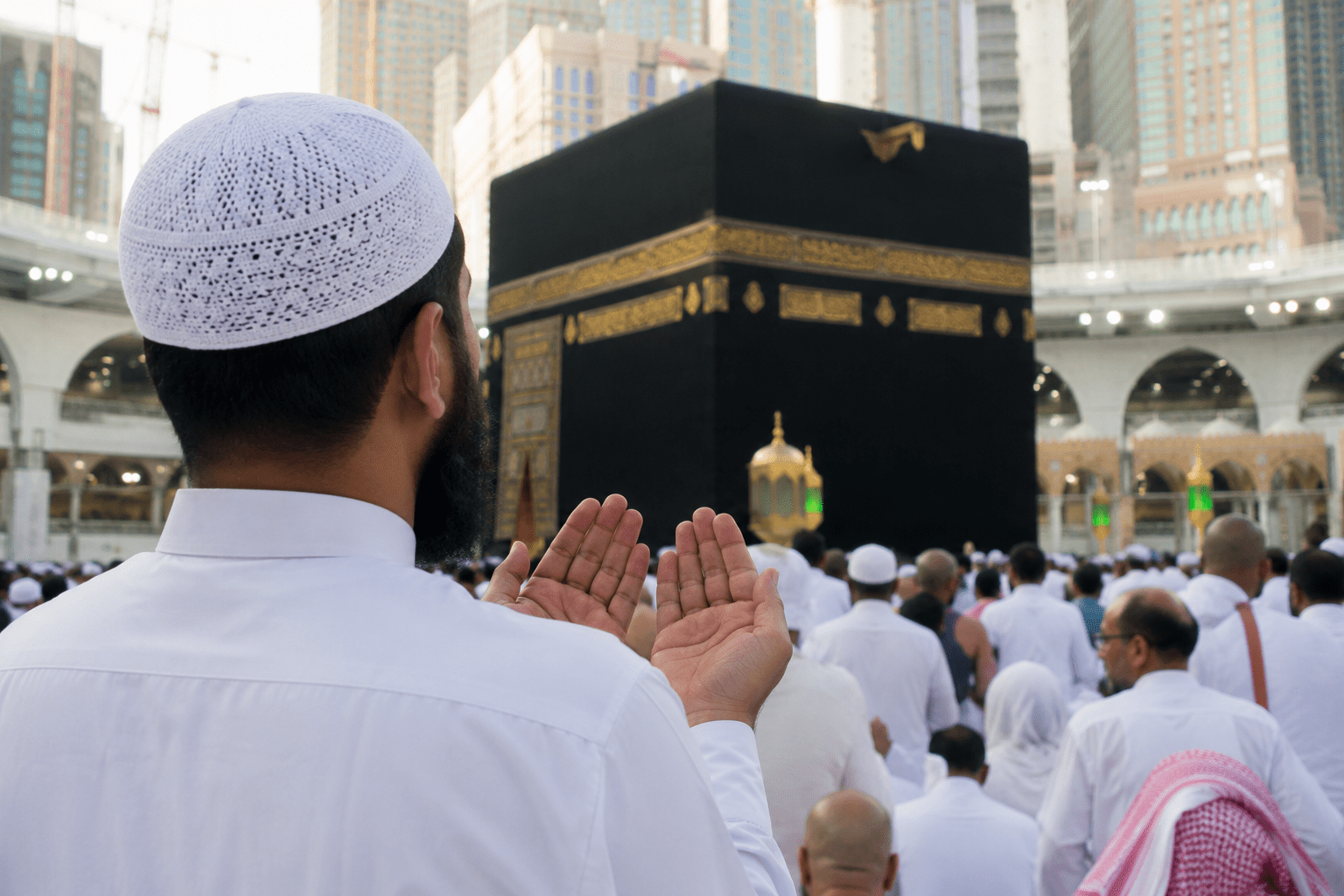
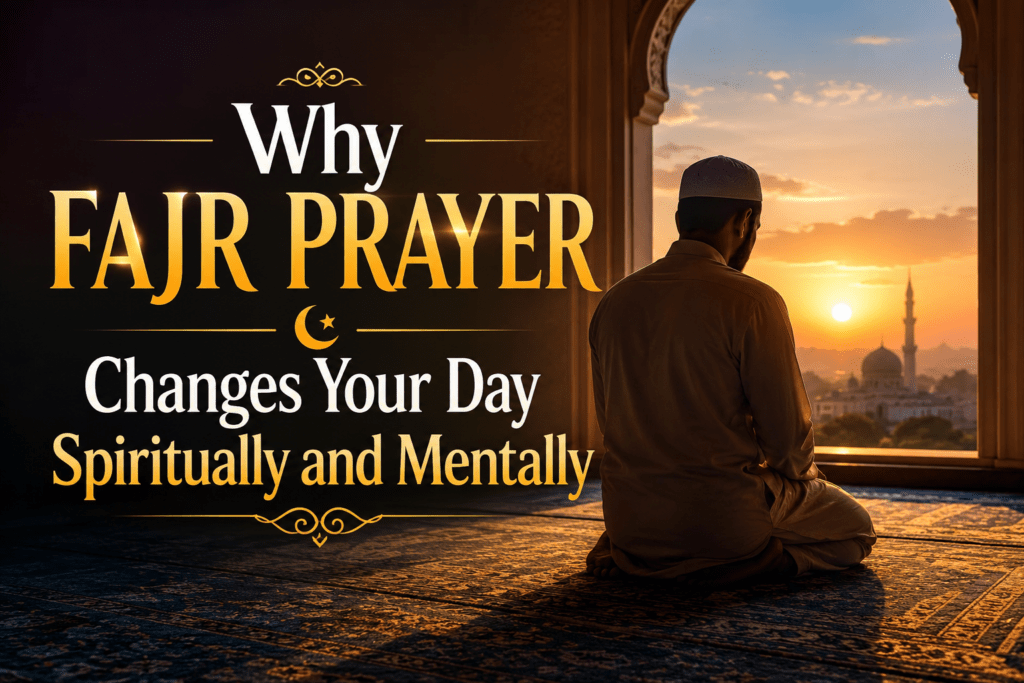
There is a moment, right before sunrise, when the whole world goes quiet. The streets are empty. The house is still. And somewhere in that silence, a Muslim gets up from a warm bed, makes wudhu with cold water, and stands before Allah.
Nobody is watching. Nobody is clapping. It is just you and your Lord.
That moment right there that small, private act of faith carries more weight than most people realise. And the effects of it do not stay locked inside those few minutes of prayer. They follow you. They shape your mood, your focus, your relationships, and the way you handle everything that the day throws at you.
If you have ever wondered why fajr prayer is important beyond just fulfilling a religious duty, or if you have been trying to become more consistent with it and want some real motivation, this article is for you. We are going to talk about the actual fajr prayer benefits not in a general way, but in a way that connects with real life.
The Moment Fajr Time Arrives, Something Special Happens
Most people think of Fajr as simply the first prayer of the day. But in Islam, early morning is not just a time slot. It is described in the Quran itself as something witnessed and honoured.
Allah says in Surah Al-Isra (17:78):
“Establish prayer at the decline of the sun until the darkness of the night, and the Quran of dawn. Indeed, the recitation of dawn is ever witnessed.”
Witnessed by who? The scholars explain that the angels of the night and the angels of the day both gather at Fajr time. It is a sacred overlap. And you, standing in prayer during that window, are in the middle of it.
Think about that for a second. Every single morning, this happens. The question is only whether you are there for it or not.
You Wake Up and You Are Already Under Allah’s Protection
One of the most comforting things about Fajr is something the Prophet Muhammad, peace be upon him, told us directly.
“Whoever prays Fajr is under the protection of Allah.” Sahih Muslim, Hadith 656
This is not poetic language. This is a promise from the best of creation, reporting from the Creator Himself.
When you step out of the house after praying Fajr, you are not on your own. Not in traffic, not at work, not in whatever difficulty the day brings. There is a cover over you that you placed there yourself by choosing to wake up.
And honestly, that feeling is hard to explain to someone who has not experienced it. But Muslims who pray Fajr consistently will tell you there is a calm that sits in the chest all morning. A quietness that does not shake easily. That is not coincidence. That is the protection being real.
Barakah in Fajr Prayer Is Something You Feel Before You Can Explain It
The word barakah gets used a lot in Islamic conversation, but what does it actually look like in daily life? At Fajr time, it looks like this: you wake up, pray, sit for a little while in dhikr, and then start your day. And somehow, things work. Tasks that should have taken three hours get done in one. A problem you were dreading resolves more easily than expected. The day feels longer in a good way.
This is not imagination. The Prophet, peace be upon him, made a specific dua for it:
“O Allah, bless my Ummah in their early mornings.” Sunan Ibn Majah, Hadith 2236
He asked Allah to place barakah in the early morning hours of his entire nation. And Allah answered that dua. The blessing is there, waiting. But it only reaches the person who is awake to receive it.
People who sleep through Fajr and wake up late often feel like the day started without them. There is a heaviness, a scattered feeling. Compare that to the person who prayed at dawn and then went about their morning with intention. The difference is visible even to outsiders.
What Fajr Does to Your Mind Is Very Real
It Gives You a Clear Head Before the World Gets Noisy
The average person wakes up and within minutes they are already overwhelmed. Phone notifications, news, social media, messages, the mental list of everything that needs to happen today. The mind gets crowded fast.
But someone who prays Fajr first has already had a moment of complete clarity before any of that noise arrived. You stood in prayer. You recited. You bowed. You placed your forehead on the ground. In those minutes, your breathing slowed down. Your thoughts settled. You remembered what actually matters.
That is a mental advantage that carries forward. The rest of the day, even when things get hectic, there is something steady underneath. A person who has already spoken to Allah at dawn does not feel the same panic as someone who jumped straight from sleep into the chaos.
It Builds a Kind of Strength You Cannot Get From Motivation Videos
Waking up before sunrise is not easy. Every honest Muslim admits this. The bed is comfortable. The sleep feels important. And that small voice says, just five more minutes.
When you overcome that when you get up anyway, make wudhu with water that might be cold, and stand up to pray you have done something. You have chosen obedience over comfort. And that choice, made consistently, shapes your character in ways that go far beyond prayer.
People who protect their Fajr tend to be more disciplined in other areas too. They follow through on commitments. They are less reactive and more patient. They get things done. Because the same muscle you use to wake up for Allah is the same one you use to push through difficulty in everything else.
The Mental Benefits of Prayer at This Hour Are Scientifically Interesting Too
Researchers who study prayer and meditation consistently find that quiet, focused morning practices reduce cortisol levels, lower anxiety, and improve concentration through the rest of the day. For Muslims, Fajr checks every box that any morning wellness practice would claim to offer.
But here is the difference. A mindfulness session is you trying to calm yourself down. Fajr prayer is you connecting to the One who created your mind in the first place. The peace that comes from it is not produced by breathing exercises. It comes from somewhere deeper.
Allah Described the People of Dawn in a Way That Should Make You Want to Be One of Them
There is a beautiful verse in Surah Adh-Dhariyat (51:18) where Allah describes the righteous:
“And in the hours before dawn, they would seek forgiveness.“
This is how Allah introduces them. Not by their wealth, their status, or their accomplishments. But by what they did in the quiet hours of early morning when nobody else was watching.
And separately, in Surah Al-Insan (76:26), Allah says:
“And glorify Him through the long night, and prostrate to Him.“
The early hours were precious to the people of the past who were close to Allah. The great scholars, the righteous generations before us, the companions of the Prophet, peace be upon him they guarded this time carefully. Not because someone told them to perform a task. But because they knew something happened in those hours that they did not want to miss.
A Morning That Starts With Fajr Just Feels Different
If you have had a period in your life when you were consistent with Fajr, you know exactly what this section is about. And if you have not, this is worth hearing from the people who have.
There is a peace that sits in the morning when it begins with prayer. The coffee tastes better, some say, though that is probably not theological. But there is a lightness. A sense that the day has a good beginning. That you started on the right foot and you did not do it for Instagram or productivity points. You did it for Allah.
That sincerity is itself part of what makes the feeling last. You are not performing for an audience. You stood up in the dark, alone, and gave your first moments to the One who gave you the ability to wake up in the first place.
How to Actually Make Fajr Consistent Practical and Honest Advice
Knowing all of this is one thing. Waking up every morning is another. Here is what actually helps, based on what Muslims who have built this habit will tell you.
Sleep has to change first. If you go to bed at one or two in the morning, Fajr becomes a battle every single day. Moving your bedtime even by thirty or forty minutes makes a huge difference. This sounds obvious but most people skip this step and then wonder why waking up is so hard.
Make intention before you sleep. There is something powerful about saying genuinely, before closing your eyes, that you want to wake up for Fajr. Many Muslims report waking up naturally just before the adhan after sincerely asking Allah to help them rise. This is not a trick. It is tawakkul combined with intention, and it works.
Keep your wudhu before sleeping. When you wake up already in a state of purity, the distance between your bed and your prayer mat feels shorter. Psychologically and spiritually, you are one step ahead.
Place your alarm far from the bed if you need to. Get up, splash water on your face, and do not sit back down on the bed. That five seconds of being vertical is often the difference between praying and going back to sleep.
Find someone to hold you accountable. A spouse, a sibling, a friend who is also trying to pray Fajr. Even a simple good morning message between two people who are both trying can keep you going on the hard mornings.
What Happens After Fajr Matters Too
Fajr should not just be something you rush through and then fall back asleep immediately. The time after Fajr is full of barakah. Sitting after prayer, making dhikr, reciting some Quran, or simply being quiet with your thoughts before the day begins this is where the morning becomes truly peaceful.
At E Quran-Academy, we always encourage students to build their Quran time right after Fajr. Even ten or fifteen minutes of recitation in that window, with proper tajweed, does more for your connection with the Quran than an hour squeezed in at midnight. If you want to make that a real habit, you can explore our Online Quran Classes and Tajweed Courses at E Quran-Academy, where qualified teachers help you learn at your own pace, wherever you are in the world.
The Prophet, peace be upon him, used to sit after Fajr until the sun rose, and then pray two units of prayer. This practice is called Salat al-Ishraq, and it carries tremendous reward. That entire window, from Fajr until mid-morning, is sacred time. Treat it that way.
For Those Who Have Drifted Away From Fajr This Part Is for You
Maybe you used to pray Fajr and somewhere along the way, life got busy, things shifted, and now it has been weeks or months. Maybe you never quite built the habit and every time you try, you manage a few days and then fall off again.
This is not a reason to feel like you have failed. This is a reason to try again today.
Allah does not expect perfection. He knows what He created. He knows that sleep pulls at you and that life is demanding and that some mornings are genuinely harder than others. What He looks for is the heart that keeps coming back. The person who misses Fajr and then wakes up feeling that genuine ache of having missed it that ache itself is a sign of faith. That ache is worth something.
Pray it as soon as you wake up if you missed it. Do not skip it entirely. Make it up, renew your intention, and begin again. Every single morning is a fresh start. That is one of the most merciful things about the structure of daily prayer in Islam.
And if you want support in reconnecting with your deen through the Quran, our online Quran learning programs at E Quran-Academy are a gentle and structured way to do that. Sometimes having a teacher and a schedule gives the routine a shape that is easier to hold onto.
Protect Your Fajr Because It Protects Everything Else
There is a reason the scholars of the past used to say: show me how someone treats their Fajr, and I will tell you about the state of their heart.
Fajr is not just a prayer. It is the first thing you choose every morning. And what you choose first sets the tone for what follows.
When you choose Fajr, you are choosing Allah before the world. You are choosing peace before the noise. You are choosing barakah before the grind. And that choice, made day after day, shapes a life in ways that are hard to fully measure but impossible not to notice.
The spiritual benefits of fajr prayer are real. The mental clarity is real. The barakah is real. The protection is real. And all of it is available to you, every single morning, no matter where you are in the world, no matter how busy your life is.
Tonight, make your intention before you sleep. Ask Allah to wake you. Set your alarm. And tomorrow morning, when the call to prayer fills the air and the world is still dark and quiet, get up. Stand. Pray.
Give Allah the first moment of your day and watch what He does with the rest of it.