Introduction: Days That Allah Loves More Than Any Others.
There is something quietly powerful about the arrival of Dhul Hijjah. Muslims around the world from the busy streets of London to the quiet suburbs of Toronto, from the sunlit neighborhoods of Sydney to the heart of Karachi feel it. A kind of spiritual stirring. A reminder that another window of mercy has opened, and the question is whether we are ready to step through it.
The first 10 days of Dhul Hijjah are not just days on an Islamic calendar. They are, according to our beloved Prophet Muhammad ﷺ, the most beloved days to Allah in the entire year. Not Ramadan. Not any other time. These ten days carry a weight of divine opportunity that no sincere Muslim should take lightly.
And the beautiful part? You do not need to be in Makkah to benefit. You do not need to be performing Hajj. Wherever you are whether you are a student, a parent, a working professional, or someone who is simply trying to be better these days belong to you too.
This guide walks you through everything you need to know: what these days are, why they matter so deeply, and most importantly, the best deeds you can do during the first 10 days of Dhul Hijjah according to the Quran and authentic Hadith.
What Are the First 10 Days of Dhul Hijjah?
The Islamic calendar is a lunar calendar, meaning months begin with the sighting of the new moon. Dhul Hijjah is the twelfth and final month of the Islamic year. Its name literally means “the month of Hajj,” because the annual pilgrimage takes place during this time.
The first ten days of this month are universally recognized by Islamic scholars as among the most spiritually significant days in existence. The 8th, 9th, and 10th of Dhul Hijjah are when the major rites of Hajj take place the standing at Arafah, the sacrifice, and the celebration of Eid ul Adha.
But long before scholars explained this significance, Allah Himself swore an oath by these days in the Quran.
The Quranic Reference: Surah Al-Fajr (89:1–2)
Allah says in the Quran:
وَالْفَجْرِ ﴿١﴾ وَلَيَالٍ عَشْرٍ ﴿٢﴾
“By the dawn, and by the ten nights.” — (Surah Al-Fajr, 89:1–2)
Islamic scholars, including Ibn Abbas, Ibn Kathir, and the majority of classical commentators, have explained that “the ten nights” referred to in this verse are specifically the first ten nights of Dhul Hijjah. When Allah takes an oath by something in the Quran, it is an indication of its immense importance and greatness. The fact that He swears by these nights is enough to understand their elevated status.
Why Are These Days So Important in Islam?
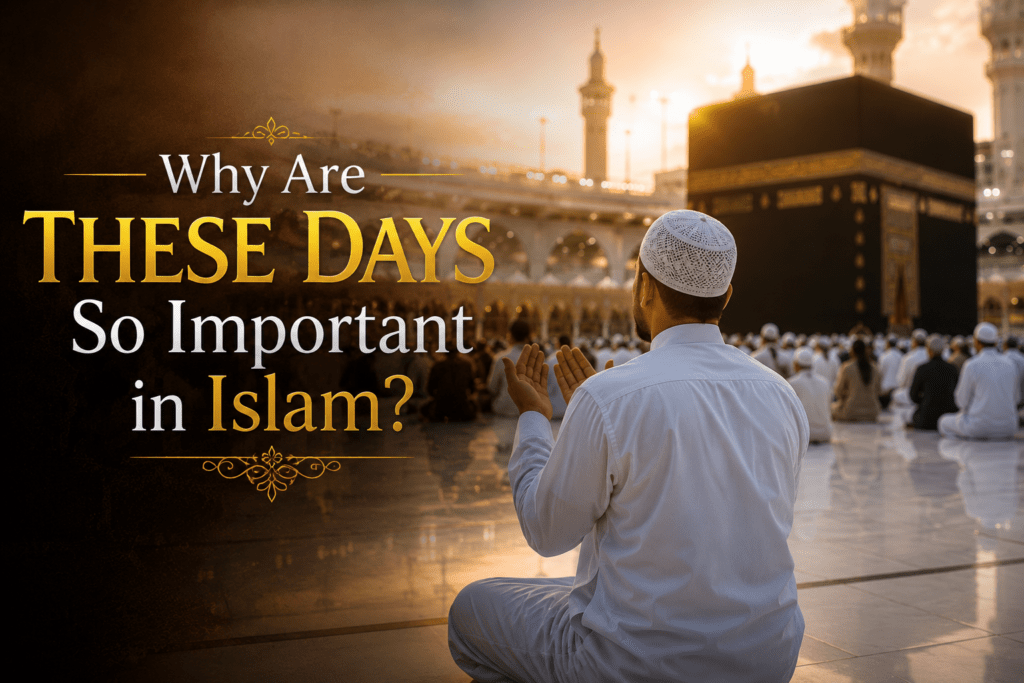
The Quran’s reference is powerful enough on its own. But the Prophet Muhammad ﷺ made it even more explicit. This hadith, reported in Sahih al-Bukhari, is one of the most important pieces of guidance any Muslim can hold onto during these days:
“There are no days in which righteous deeds are more beloved to Allah than these ten days.” The companions asked, “Not even jihad in the way of Allah?” He replied, “Not even jihad in the way of Allah, except for a man who goes out with his life and wealth and does not return with either of them.” (Sahih al-Bukhari, 969)
Let that sit for a moment. The Prophet Muhammad ﷺ is telling us that even the act of striving in the path of Allah, one of the highest acts of worship in Islam, does not surpass the reward of consistent good deeds done during these ten days. Only the person who gives everything, including their life, reaches that level.
This means that every prayer you pray, every page of the Quran you read, every act of charity you give, every Zikar you whisper on your lips during these ten days carries a weight and a worth that is incomparable to any other time of the year.
That is why scholars throughout Islamic history have called these the most important ten days a Muslim will experience each year.
Best Deeds to Do During the First 10 Days of Dhul Hijjah.
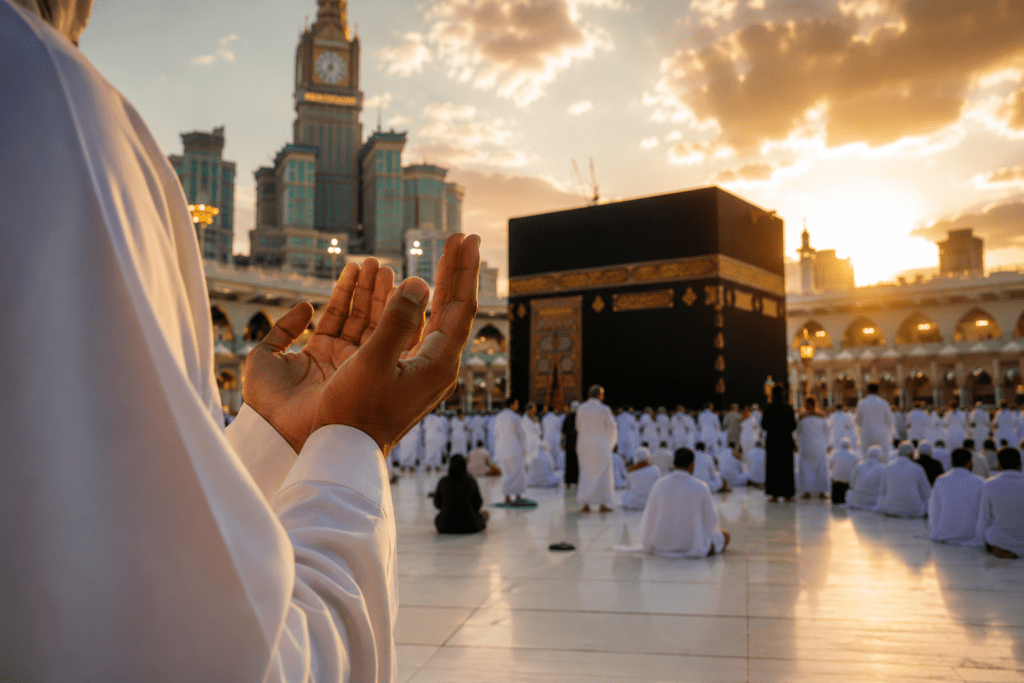
Now comes the heart of this guide. What exactly should you be doing during these days? The following deeds are rooted in the authentic Quran and Hadith. Start with what you can, build consistency, and remember that even small deeds done sincerely are beloved to Allah.
1. Increase Your Quran Recitation
The Quran is the word of Allah. Reciting it during ordinary days already carries enormous reward imagine reciting it during the most beloved days of the year.
The Prophet Muhammad ﷺ said: “Whoever reads a letter from the Book of Allah will receive a Hasana (good deed), and a Hasana is multiplied by ten.“ (Tirmidhi, 2910)
During the first 10 days of Dhul Hijjah, make it a personal commitment to recite more than you normally do. If you read one page a day, try for five. If you read after Fajr Prayer, add a session after Asr. Bring your children into this habit. Let the Quran fill your home during these blessed days.
For those who still struggle with their tajweed or want to read with proper pronunciation, this is also an excellent time to begin learning properly. Platforms like E Quran-Academy offer structured courses such as the Noorani Qaida Course, Quran Reading with Tajweed, and Online Quran Classes for Kids so that your recitation truly honors the words of Allah. A child who learns the Quran in these days, encouraged by their parents, plants a seed that grows for a lifetime.
2. Fast During the First Nine Days Especially the Day of Arafah
Fasting is one of the most powerful acts of worship in Islam, and in Dhul Hijjah it carries a special significance.
The Prophet Muhammad ﷺ used to fast the first nine days of Dhul Hijjah. His wife Hafsa (may Allah be pleased with her) reported:
“The Prophet ﷺ used to fast the first nine days of Dhul Hijjah, the day of Ashura, and three days of each month.” — (Abu Dawud, 2437)
If fasting all nine days feels difficult due to work or health, then at least try to fast on the 9th of Dhul Hijjah the Day of Arafah. Its reward is staggering:
“Fasting on the Day of Arafah, I hope from Allah that it will expiate the sins of the year before it and the year after it.” — (Sahih Muslim, 1162)
One day of fasting, and two full years of minor sins forgiven before and after. This is an act of mercy that is simply too great to ignore.
Note: This fasting applies to Muslims who are not performing Hajj. Those on Hajj do not fast on Arafah.
3. Recite Takbeer, Tahmeed, and Tahleel abundantly
This is a Sunnah that many Muslims overlook during the first 10 days of Dhul Hijjah, yet it is among the most emphasized acts of worship during this time.
The Prophet ﷺ said:
“There are no days greater in the sight of Allah and in which righteous deeds are more beloved to Him than these ten days, so recite often the tahleel, takbeer, and tahmeed.” — (Ahmad, 5/323; declared Sahih by Al-Albani)
What to Recite:
Takbeer:
اللَّهُ أَكْبَرُ Allahu Akbar Translation: “Allah is the Greatest”
Tahmeed:
الْحَمْدُ لِلَّهِ Alhamdulillah Translation: “All praise is due to Allah”
Tahleel:
لَا إِلَهَ إِلَّا اللَّهُ La ilaha illallah Translation: “There is no god worthy of worship except Allah”
Tasbeeh:
سُبْحَانَ اللَّهِ Subhanallah Translation: “Glory be to Allah.”
You can recite these words while cooking, driving, walking to work, or waiting for something. They cost no money, require no special skill, and yet they fill the scale of good deeds during these blessed days. Make them a constant companion on your tongue.
The Takbeer is traditionally recited aloud from the Fajr of the 1st of Dhul Hijjah through the Asr prayer of the 13th (the Takbeer of the days of Tashreeq). Men are encouraged to recite it loudly in the masjid, markets, and streets as a declaration of Allah’s greatness.
4. Make Dua and Sincerely Seek Forgiveness
These ten days are a time of divine closeness. Allah’s mercy is especially wide open, and He loves to hear His servants call upon Him.
One of the most beautiful duas you can make during these days and particularly on the Day of Arafah is the dua the Prophet ﷺ repeated most on that blessed day:
لَا إِلَهَ إِلَّا اللَّهُ وَحْدَهُ لَا شَرِيكَ لَهُ، لَهُ الْمُلْكُ وَلَهُ الْحَمْدُ وَهُوَ عَلَى كُلِّ شَيْءٍ قَدِيرٌ
La ilaha illallahu wahdahu la sharika lahu, lahul mulku wa lahul hamdu wa huwa ‘ala kulli shay’in qadir
Translation: “There is no deity worthy of worship except Allah alone, with no partner. To Him belongs the dominion and to Him belongs all praise, and He is over all things capable.” — (Tirmidhi, 3585)
Pair your duas with genuine tawbah repentance. Sit quietly, reflect on your shortcomings, feel the weight of your mistakes, and then turn to Allah with full honesty. He said in the Quran:
قُلْ يَا عِبَادِيَ الَّذِينَ أَسْرَفُوا عَلَىٰ أَنفُسِهِمْ لَا تَقْنَطُوا مِن رَّحْمَةِ اللَّهِ ۚ إِنَّ اللَّهَ يَغْفِرُ الذُّنُوبَ جَمِيعًا
“Say: O My servants who have transgressed against themselves, do not despair of the mercy of Allah. Indeed, Allah forgives all sins.” — (Surah Az-Zumar, 39:53)
Do not let shame keep you away. These ten days are the perfect time to come back.
5. Give Charity Generously
Sadaqah during these days is not just a good deed it is a multiplied investment in your akhirah.
The Prophet ﷺ said: “The shade of the believer on the Day of Resurrection will be his charity.” (Ahmad)
Think about what you can give during these ten days. It does not have to be a large amount. Feed a neighbor. Sponsor an orphan’s meal. Donate to a charitable cause. Help a struggling family in your community prepare for Eid. Give your local masjid what it needs. Even a smile, as the Prophet ﷺ reminded us, is sadaqah.
The point is not the size of the gift. The point is that you are choosing, in the most beloved days of the year, to loosen your grip on the dunya and open your hand for the sake of Allah.
6. Perform Extra Salah, especially Tahajjud.
The five daily prayers are the foundation. But these ten days call us to go beyond the foundation.
Pray your Sunnah prayers consistently. Add nawafil. Most importantly, try to wake up in the last third of the night for Tahajjud. These are the moments when Allah, in a manner befitting His Majesty, descends to the lowest heaven and asks:
“Who is calling upon Me that I may answer them? Who is asking of Me that I may give them? Who is seeking My forgiveness that I may forgive them?” — (Sahih al-Bukhari, 1145; Sahih Muslim, 758)
There is no better time to stand before Allah in the quiet of the night than during these ten blessed days. Even two rakats of Tahajjud, prayed with presence and sincerity, can change something inside you.
7. Strengthen Your Family Relationships
Islam is not just a private spiritual experience it is lived in community and in the home. These ten days are an opportunity to repair what is broken, to strengthen what is good, and to nurture the people Allah has placed in your life.
Call your parents if you have been distant. Reconcile with a sibling. Show your spouse genuine appreciation. Be patient with your children.
The Prophet ﷺ said: “The best of you are those who are best to their families.” (Tirmidhi, 3895)
Ibadah and akhlaq are not separate things. Beautiful character during these days is worship too.
8. Learn and Teach Islam, Especially to Your Children.
Knowledge in Islam is never just about knowing. It is about living it and passing it on. During these ten days, create moments of learning in your home.
Read a Hadith together at the dinner table. Explain to your children why these days are special. Help them make their own small commitments, perhaps fasting on Arafah for the first time, or learning a new surah. When children grow up knowing the value of Dhul Hijjah, they carry that knowledge into adulthood and pass it to their own children in turn.
Enrolling children in structured Quran learning is one of the greatest gifts a parent can give. A child who learns to read the Quran with proper tajweed and understanding builds a relationship with Allah’s words that no worldly gift can replace.
The Importance of the Day of Arafah.
Of all the ten days, the 9th, the Day of Arafah, stands above the rest in spiritual significance.
On this day, the pilgrims who have traveled from every corner of the world stand on the plain of Arafah, barefoot and humbled, pouring their hearts out to Allah. It is the peak of Hajj. But even for those not on Hajj, this day carries extraordinary weight.
The Prophet ﷺ said: “Hajj is Arafah.” (Nasai, 3016) — meaning that the standing at Arafah is the defining pillar of the entire Hajj journey.
Allah forgave the sins of those standing at Arafah in the time of the Prophet ﷺ. And His mercy on this day is not limited to those physically present there. He boasts of the people of Arafah to the angels:
“Look at My servants who have come to Me disheveled, dusty, and crying out from every distant pass. They hope for My mercy, though they have not seen My punishment.” — (Ibn Hibban, 3853; declared Sahih)
For those not on Hajj: fast this day, fill it with dhikr, make your best duas, read Quran, and ask Allah for everything you need in this life and the next. This is one of the greatest opportunities the entire year offers.
Test Your Islamic Knowledge
Mistakes Muslims Should Avoid During Dhul Hijjah.
Just as we know what to do, it is worth naming the traps that cause us to waste these precious days:
- Missing or delaying prayers. No blessing of these days is worth more than the foundation of salah. Do not let these days pass while prayers are being skipped or prayed lazily.
- Excessive screen time and entertainment. Social media, streaming, and idle content will absorb the hours you were meant to fill with Zikar and ibadah. Be intentional about limits.
- Treating Dhul Hijjah as only an Eid shopping season. Preparing for Eid is fine, but when the entire ten days become about clothes, food, and decorations while the Quran and prayer are forgotten, something is deeply out of balance.
- Neglecting the Quran. Some Muslims will go the entire ten days without opening the Quran once. This is a loss that is difficult to measure.
- Postponing good deeds. “I’ll start from tomorrow” is one of shaytan’s oldest tricks. Start today. Start now.
A Simple Daily Dhul Hijjah Worship Routine.
You do not need a perfect plan. You need a realistic one. Here is a simple daily routine that can help you make the most of these ten days:
Morning:
- Wake up for Tahajjud (even 2 rakats before Fajr)
- Pray Fajr on time, in its full Sunnah
- Recite morning adhkar (Subhanallah, Alhamdulillah, Allahu Akbar — 33 times each)
- Read at least 5-10 minutes of Quran
- Make personal dua for yourself and your loved ones
Throughout the Day:
- Keep Takbeer, Tahmeed, and Tahleel on your tongue
- Give even a small amount of sadaqah
- Maintain wudu as much as possible
- Be kind, patient, and gentle in your interactions
Evening:
- Pray all Sunnah prayers with your farz prayers
- Recite evening adhkar
- Read additional Quran before sleeping
- Make a short dua of gratitude and forgiveness before bed
On the Day of Arafah (9th Dhul Hijjah):
- Fast the full day
- Dedicate extra time to dua and zikar
- Read Surah Al-Ikhlas, Al-Falaq, and An-Nas
- Make heartfelt repentance
Even following half of this routine consistently will make your Dhul Hijjah transformative, in sha Allah.
How Families Can Make Dhul Hijjah Special for Children.
Children absorb what surrounds them. If they grow up in a home where Dhul Hijjah is treated like any ordinary stretch of days, they will carry that indifference with them. But if they grow up seeing their parents praying at night, fasting, reading Quran, and talking about Allah with love that becomes their normal.
Here are some practical ways to bring Dhul Hijjah alive for your children:
- Explain what these days are in simple language. Tell your child: “These are the ten most special days of the year. Even more special than Ramadan nights for doing good deeds. Let’s make them count together.”
- Create a family dhikr time. After Maghrib, gather for five minutes of Takbeer, Tahmeed, and Tahleel together. Make it joyful, not forced.
- Let them fast on Arafah (if age-appropriate). Even fasting half the day builds a beautiful memory and a lifelong habit.
- Read Quran together. Even one page together, every evening, builds the habit and the bond.
- Tell the story of Ibrahim (AS). Dhul Hijjah is deeply connected to Prophet Ibrahim — his sacrifice, his faith, his family. Children love stories, and this one is one of the greatest ever told.
- Teach them to make dua in their own words. Some of the most powerful duas Allah receives are from children who ask with complete sincerity and trust.
The home is the first masjid a child knows. Make it feel like one during these ten days.
Final Thoughts: Do Not Let These Days Slip Away.
Every year, Dhul Hijjah comes. And every year, for many of us, it passes too quickly and we realize too late that we did not use it the way we should have.
But this year does not have to be that way.
You now know that these are the most beloved days to Allah. You know the rewards of fasting, of Zikar, of Quran recitation, of charity, of dua. You have been given the knowledge. What you do with it is your choice.
The Prophet Muhammad ﷺ once said: “Take advantage of five before five: your youth before your old age, your health before your sickness, your wealth before your poverty, your free time before your preoccupation, and your life before your death.” (Mustadrak Al-Hakim, 7846)
These ten days of Dhul Hijjah are a gift within a lifetime. They are a chance for the struggling believer to climb back. They are a mercy for the one who has been distant from Allah. They are a celebration for the one who has been consistent.
Whoever you are right now, these days are calling you. They are calling your family. They are calling your heart.
Answer that call. Fill these days with what Allah loves. Let this Dhul Hijjah be one you remember not because of what you bought or wore or ate, but because of how close it brought you to your Lord.
May Allah accept from all of us. Ameen.
Frequently Asked Questions (FAQs)
The first 10 days of Dhul Hijjah are the opening days of the twelfth and final month of the Islamic lunar calendar. They are considered the most virtuous and blessed days of the entire year according to the Prophet ﷺ (Sahih al-Bukhari, 969). They include the Day of Arafah on the 9th and conclude with Eid ul Adha on the 10th.
The Prophet ﷺ explicitly stated that no days exist in which righteous deeds are more beloved to Allah than these ten days not even the ten last days of Ramadan for deeds (though the last nights of Ramadan are greater for night prayer). Allah Himself swore by them in Surah Al-Fajr (89:1–2), which indicates their immense divine importance.
Yes. The Prophet ﷺ would fast the first nine days of Dhul Hijjah (Abu Dawud, 2437). The fasting on the Day of Arafah (9th Dhul Hijjah) is especially emphasized. Fasting on Arafah expiates the sins of the year before and the year after (Sahih Muslim, 1162). Muslims not performing Hajj are encouraged to fast this day.
The Prophet ﷺ recommended abundant recitation of Takbeer (اللَّهُ أَكْبَرُ — Allahu Akbar), Tahmeed (الْحَمْدُ لِلَّهِ — Alhamdulillah), Tahleel (لَا إِلَهَ إِلَّا اللَّهُ — La ilaha illallah), and Tasbeeh (سُبْحَانَ اللَّهِ — Subhanallah). These can be recited throughout the day in any situation (Ahmad, 5/323).