Introduction.
Have you ever sat down after Fajr Prayer, opened the Quran, and recited a beautiful surah but then closed it without really knowing what you just read? Most of us have been there. We love the Quran. We recite it with care. But sometimes, the deep meaning behind the words stays hidden from us, and we miss out on lessons that could genuinely change our lives.
Surah Al-Hajj is one of those chapters. It is rich, layered, and emotionally powerful. It speaks about creation, death, resurrection, sacrifice, and the unity of all believers and yet so many Muslims have never explored its meaning beyond its name. This article is here to change that.
Whether you’re reading Surah Hajj for the first time or you’ve recited it hundreds of times without really reflecting, this breakdown will open up its wisdom in a way that is clear, simple, and spiritually uplifting.
What Is Surah Al-Hajj About?
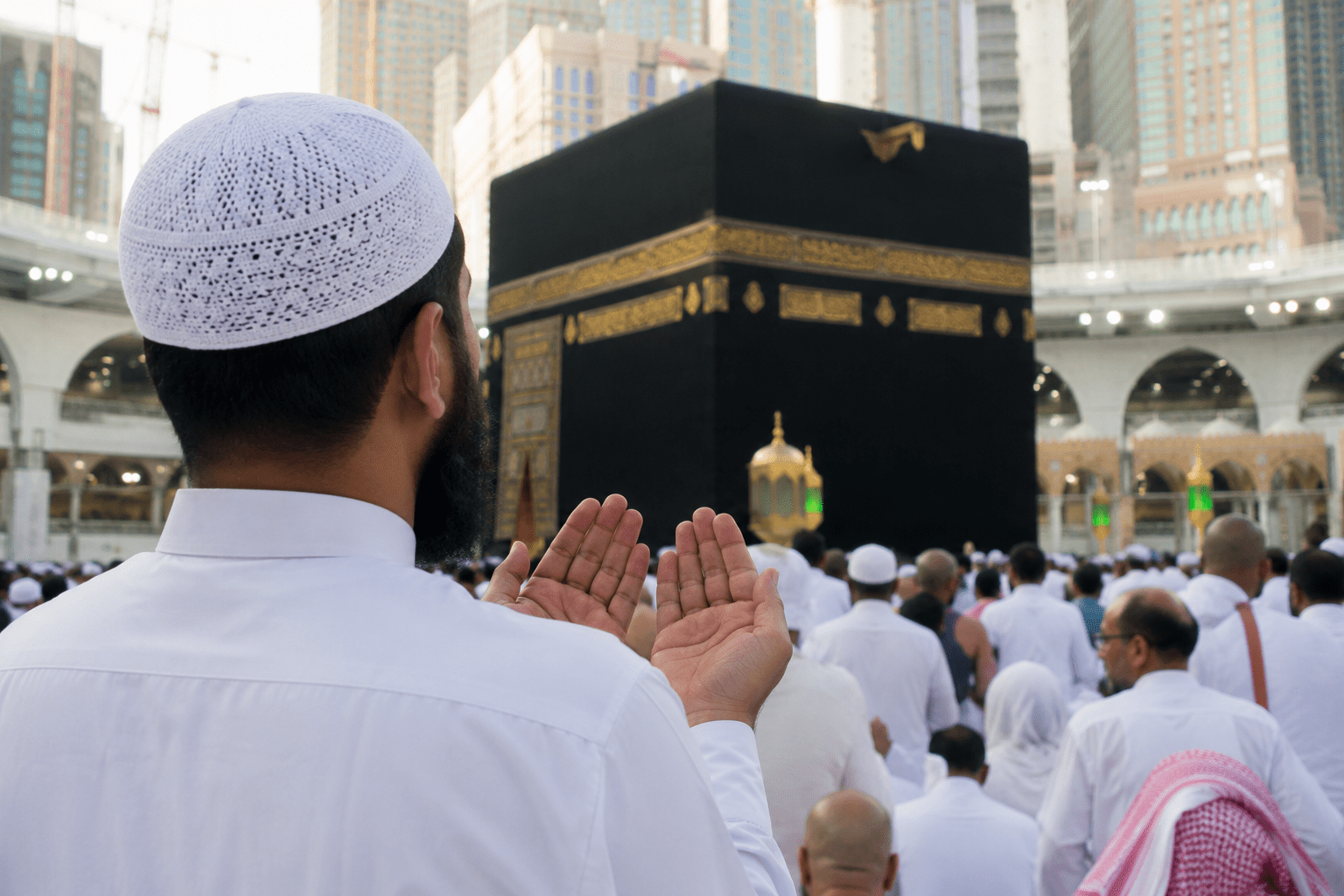
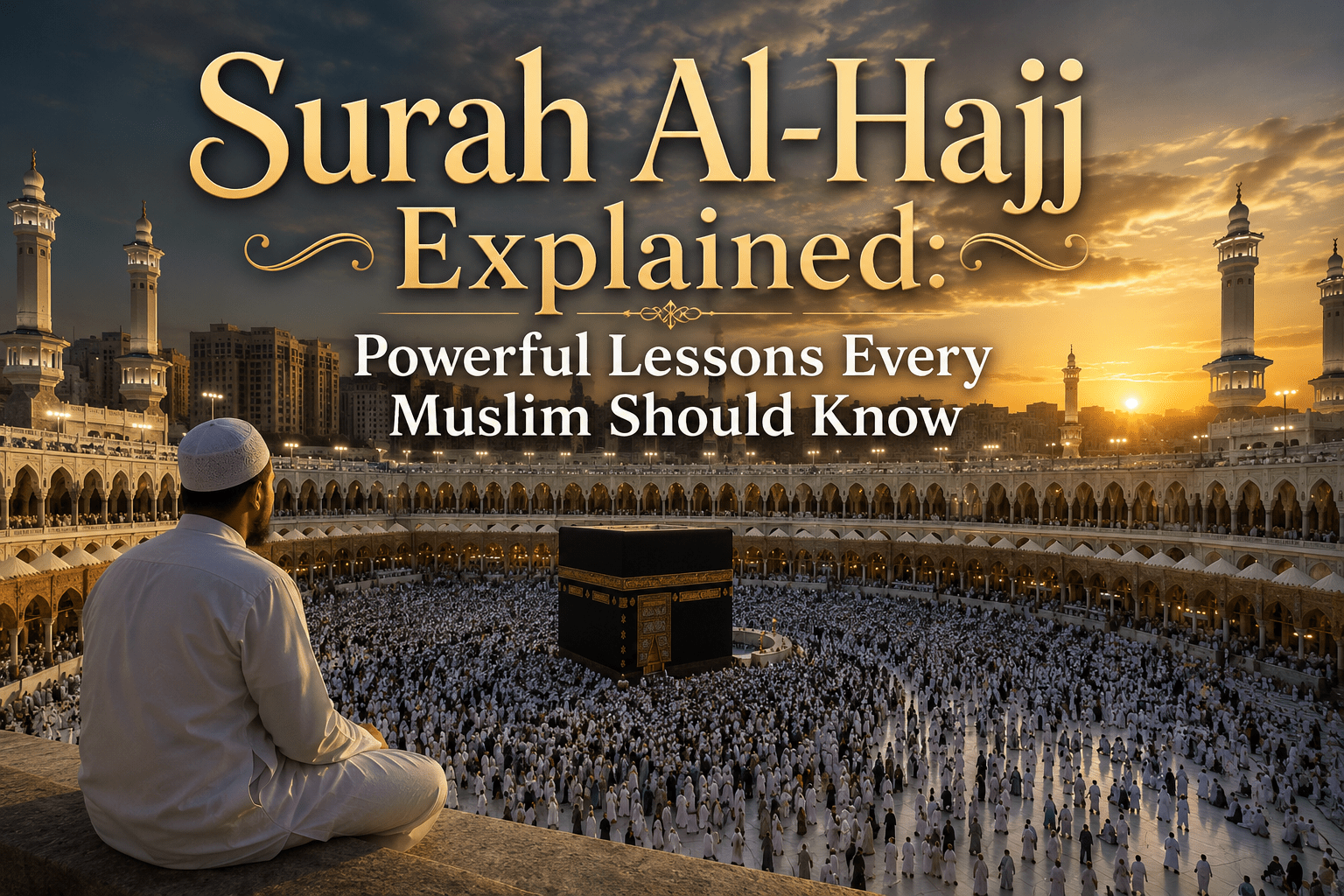
Surah Al-Hajj is the 22nd chapter of the Quran. It takes its name from the word “Hajj,” which refers to the sacred pilgrimage to Makkah one of the Five Pillars of Islam. But the surah is about far more than just the pilgrimage ritual.
It covers some of the biggest themes in all of Islamic belief:
- The reality of the Day of Judgment
- The power and majesty of Allah
- The spiritual purpose behind Hajj and sacrifice
- The importance of sincere worship
- The protection of places of worship
- The importance of standing firm against oppression
Surah Al-Hajj — in which para (juz)? It is located in Juz 17 of the Quran.
Surah Al-Hajj — Makki or Madni? This is one of the most unique surahs in the entire Quran. Most scholars consider it to contain both Makki and Madni verses, meaning some ayaat were revealed in Makkah and others were revealed after the migration to Madinah. This gives it a distinctive depth that combines the early calls to faith with the practical guidance of the Madani period.
The surah has 78 verses and touches the heart in ways that very few chapters of the Quran do.
Why Surah Al-Hajj Is Unique in the Quran.
Scholars throughout history have noted that Surah Al-Hajj stands apart. Its style shifts between warning and hope, between cosmic scale and intimate detail. One moment it describes the terror of the Day of Judgment, and the next it invites you to reflect on a seed growing in the earth.
The very first verses set the tone:
“O mankind, fear your Lord. Indeed, the convulsion of the [final] Hour is a terrible thing.” (Surah Al-Hajj, 22:1)
This opening is not just a warning it’s an invitation to wake up. Allah addresses all of humanity, not just Muslims. It is a reminder that every soul will stand before its Creator, and that this life is not the final destination.
The verse then continues to describe how, on that Day, every nursing mother will forget her child, every pregnant woman will lose her burden, and people will appear drunk not from wine, but from the sheer terror of what is happening. These are not exaggerations. They are vivid descriptions to make us feel the weight of what is coming.
And yet, within the same surah, Allah also speaks about mercy, guidance, and the beauty of worship. That balance between fear and hope is what makes Surah Al-Hajj so spiritually alive.
Surah Hajj Ayat 27 and the Call to Hajj.
One of the most moving moments in this surah comes in Ayat 27, where Allah commands Prophet Ibrahim (peace be upon him) to call humanity to Hajj:
“And proclaim to the people the Hajj [pilgrimage]; they will come to you on foot and on every lean camel; they will come from every distant pass.” (Surah Al-Hajj, 22:27)
Imagine the scene. Ibrahim AS is standing in an empty valley, surrounded by desert. There is no city, no crowd, no megaphone. Allah tells him to call people to come. And Ibrahim, with complete trust in Allah, makes the call.
What happened next? Billions of people responded across centuries, across continents, across languages and colors and nationalities. Every Muslim who has ever performed Hajj, or who has ever intended to, is in some way answering the call of Ibrahim AS.
This ayah is a profound reminder of two things:
First, the obedience and trust of Prophet Ibrahim AS. He did not ask “how?” He simply obeyed.
Second, the unity of the Muslim ummah. Hajj is not just a spiritual journey. It is a living proof that Muslims, regardless of where they come from, are one body, one community, united by their love for Allah.
When we read about Surah Hajj Ayat 27 with understanding, we feel the weight of that sacred connection. It connects us here, now, today to every Muslim who has ever answered that call before us.
The Powerful Meaning of Surah Hajj Ayat 37.
Perhaps the most well-known verse of this surah is Ayat 37. It delivers one of the most important lessons in all of Islam:
“Their meat will not reach Allah, nor will their blood, but what reaches Him is piety from you.” (Surah Al-Hajj, 22:37)
This ayah is about the sacrifice of Qurbani (Udhiyah) during Eid Al-Adha. But its lesson reaches far beyond the act of slaughtering an animal.
Allah is telling us clearly: He does not need the animal. He does not need the blood or the meat. What He looks at what truly matters to Him is the sincerity in your heart. It is your taqwa. Your God-consciousness. Your intention.
This is a lesson that should reshape how we approach every act of worship. When we pray, it is not the physical movements Allah values alone it is the presence of the heart. When we give charity, it is not the amount it is the intention. When we fast, it is not just hunger it is the submission.
Surah Hajj Ayat Number 37 is a gentle but powerful rebuke to any form of worship that has become mechanical, performative, or empty. Real worship lives in the heart first.
Surah Hajj Ayat 40 and the Protection of Worship Places.
Surah Al-Hajj also contains one of the most important statements in the Quran about religious freedom and the sanctity of places of worship:
“[They are] those who have been evicted from their homes without right — only because they say, ‘Our Lord is Allah.’ And were it not that Allah checks the people, some by means of others, there would have been demolished monasteries, churches, synagogues, and mosques in which the name of Allah is much mentioned.” (Surah Al-Hajj, 22:40)
This verse was revealed in the context of the early Muslims being driven out of Makkah. They left their homes, their families, and their lives simply because they believed in Allah alone.
But what is remarkable is how Allah frames His response. He says that if He did not use some people to check others, all places of worship not just mosques, but churches, synagogues, and monasteries would be destroyed.
This verse shows that Islam does not condone the destruction of any sacred space. It reflects a deep respect for the act of worshipping Allah, in whatever sincere form it takes. And it reminds us that protecting justice and religious freedom is part of the mission of this ummah.
Lessons From Surah Al-Hajj Every Muslim Should Learn.
Sincerity in Worship.
The most repeated theme in Surah Al-Hajj is ikhlas sincerity. Allah is not impressed by grand acts of worship that are empty on the inside. What He looks for is a heart that turns to Him honestly, humbly, and without pretense. Before your next prayer or act of charity, pause. Ask yourself: Why am I doing this? If the answer is truly for Allah, that is enough.
Preparing for the Day of Judgment.
The surah opens with a powerful description of the Day of Judgment not to terrify us into paralysis, but to wake us up. Every day we live is a preparation for that Day. The Quran is asking us: Are you ready? Are you living in a way that reflects your belief in accountability? This question, asked honestly and regularly, can transform how we spend our time.
Importance of Salah and Remembrance of Allah.
In several places in this surah, Allah emphasizes the importance of prayer and the remembrance (dhikr) of His name. Worship is not a burden it is the connection that keeps the soul alive. In a world full of noise, distraction, and anxiety, Salah is the five-times-daily reminder that there is something greater than all of it. Guard your prayers with love, not just habit.
Helping Others and Serving Humanity.
The surah connects worship with action. It mentions establishing prayer alongside giving zakat and helping those in need. Real faith does not stay inside the prayer rug. It walks into the world and does something useful. Serving others your family, your neighbor, your community is itself an act of worship.
Unity of Muslims.
The theme of Hajj running through this surah is inseparable from its message of unity. Muslims from every corner of the earth, wearing the same simple white cloth, standing together. No race, no class, no passport. Just believers before their Lord. This surah calls us back to that brotherhood and sisterhood not just during Hajj season, but in every interaction we have with other Muslims.
Patience During Difficult Times.
The early Muslims who are referenced in this surah had lost everything their homes, their safety, their communities. And yet they held firm. Their patience was not passive resignation. It was active, dignified, and rooted in trust of Allah. Whatever you are going through today, Surah Al-Hajj is a reminder that the believers who came before you endured far worse and they found their reward with Allah.
Benefits of Reflecting on Surah Al-Hajj.
When a Muslim reads the Quran not just as a ritual recitation but as a living guide, something shifts. The Quran begins to speak to real situations, real struggles, and real questions.
Surah Al-Hajj, in particular, has a way of grounding a person. It reminds you of what matters. The Day of Judgment is real. Sincerity is what Allah values. Sacrifice is not about the act itself it’s about the heart behind it.
For those who want to go deeper into this kind of Quranic understanding, platforms like E Quran-Academy offer a meaningful starting point. Whether you’re a parent wanting your children to learn Quran with proper Tajweed, an adult who wants to revisit the basics through a Noorani Qaida Course, or someone who wants to truly understand what they’re reciting through structured Online Quran Classes, learning doesn’t have to stop at recitation.
The goal of a Hifz Program is not just memorization it’s internalizing the Quran so it becomes part of who you are. And that begins with understanding. E Quran-Academy’s online platform is designed for learners of all levels, from children to adults, helping them connect with the Quran not just in sound, but in meaning.
How Muslims Can Apply the Lessons of Surah Al-Hajj Today.
These lessons are not historical relics. They are living principles.
Practice sincerity daily. Before any act of worship or good deed, check your intention. This one habit, done consistently, will purify your entire spiritual life over time.
Think about the Akhirah. Not in a morbid way but as a compass. When you’re unsure about a decision, ask: what choice would I be glad I made, standing before Allah?
Give your Salah the attention it deserves. Put your phone away. Face the qiblah. Breathe. You have only a few minutes with your Lord make them count.
Serve someone this week. Feed someone who is hungry, help someone who is struggling, or simply check in on a neighbor who lives alone. This is the Quran made real.
Reconnect with your Muslim community. In many parts of the world, Muslims live isolated from one another. Make the effort. Attend Jumu’ah. Greet your brothers and sisters with warmth. Unity is an act of worship too.
Reflect on your sacrifices. Eid Al-Adha comes every year, but the spirit of Qurbani should live in us all year round. What are you willing to give up for Allah’s sake? What habits, comforts, or distractions are you holding onto that distance you from Him?
Conclusion.
Surah Al-Hajj is a surah that deserves to be known, understood, and lived.
From its opening warning about the terror of the Last Day, to the call of Ibrahim AS echoing across centuries, to the clear declaration that it is taqwa not rituals alone that reaches Allah, this surah covers the full range of what it means to be a believing Muslim in this world.
If you have been reciting Surah Hajj without knowing its meaning, today is a beautiful day to change that. Open a translation. Read slowly. Let the words land.
The Quran was not given to us to be placed on high shelves and recited at funerals. It was given to us as a guide a living, breathing guide for how to walk through this world with purpose, with dignity, and with our hearts attached to Allah.
May Allah give us all the ability to understand His Book, to act on what we learn, and to meet Him on the Day of Judgment with hearts that were truly sincere.
FAQ’s
Surah Al-Hajj is the 22nd chapter of the Quran, named after the Hajj pilgrimage. Its central themes include the reality of the Day of Judgment, the call to sincere worship, the spiritual meaning of sacrifice, the unity of Muslims, and the importance of patience and obedience to Allah.
Surah Al-Hajj is found in Juz 17 of the Quran.
Surah Al-Hajj is unique in that it contains both Makki and Madni verses, making it one of the few surahs in the Quran with this distinction. Most scholars classify it as primarily Madni in nature.
Ayat 27 refers to Allah’s command to Prophet Ibrahim (AS) to call humanity to Hajj. Scholars explain that Ibrahim AS made this proclamation despite there being no large population around him at the time, reflecting complete trust in Allah. This verse is the spiritual basis for the global Muslim pilgrimage that continues to this day.
Ayat 37 explains that the meat and blood of sacrificed animals do not reach Allah rather, it is the taqwa (God-consciousness and sincerity) of the worshipper that He values. This verse is a fundamental teaching on the role of intention in Islamic worship.