For beginners, families, and lifelong learners · ~9 min read

There is something deeply personal about the moment a person decides to learn the Quran. For some, it begins in childhood, sitting beside a parent or grandparent, repeating words that carry centuries of meaning. For others, it comes later in life, quietly, with a sense of longing and a question: where do I even start?
If you have been searching for the best way to learn Quran online at home, you are not alone. Thousands of Muslims around the world, from different countries, backgrounds, and schedules, are making this same journey. And the good news is that learning has never been more accessible. With the right approach, the right teacher, and a little consistency, you can build a meaningful Quranic education entirely from home.
This guide will walk you through everything, practically and honestly, so you can move forward with clarity.
Why Online Quran Learning Works
For years, the traditional model was the only option. You found a local mosque, a neighborhood teacher, or a madrassah. That still works for many people, and there is real value in it. But online Quran classes have opened the door for those who live in places without qualified teachers, those with demanding work schedules, parents whose children need flexible timing, and reverts who are just beginning to understand Islam.
One-on-one Quran classes delivered online give you something rare: undivided attention from a teacher who can pace the lesson entirely around you. There is no rushing because someone else in the group is faster. There is no embarrassment if you need to repeat something ten times. The lesson belongs to you.
This personalized structure is one of the biggest reasons online Quran learning for beginners has become so effective.
Step-by-Step Guide to Learn Quran Online at Home
Step 01
Start with Arabic letters
Before anything else, learn to recognize and pronounce Arabic letters correctly. This is the foundation everything else is built on.
Step 02
This beginner textbook bridges Arabic letters and Quranic reading. Most qualified teachers start here, and for good reason.
Step 03
Begin Quran reading
Once you can recognize letters and basic sounds, your teacher will introduce short surahs. Start with what you know from daily prayers.
Step 04
Add Tajweed rules
Tajweed is the set of rules that govern correct Quranic recitation. Learning it early prevents bad habits from forming.
Step 05
Revise and memorize
Consistent daily revision is more powerful than long infrequent sessions. Even 20 minutes a day compounds into real progress.
Step 06
Set a long-term goal
Whether it is fluent recitation, Hifz, or understanding meaning, a clear goal keeps your learning purposeful and motivated.
The Importance of Learning with Tajweed
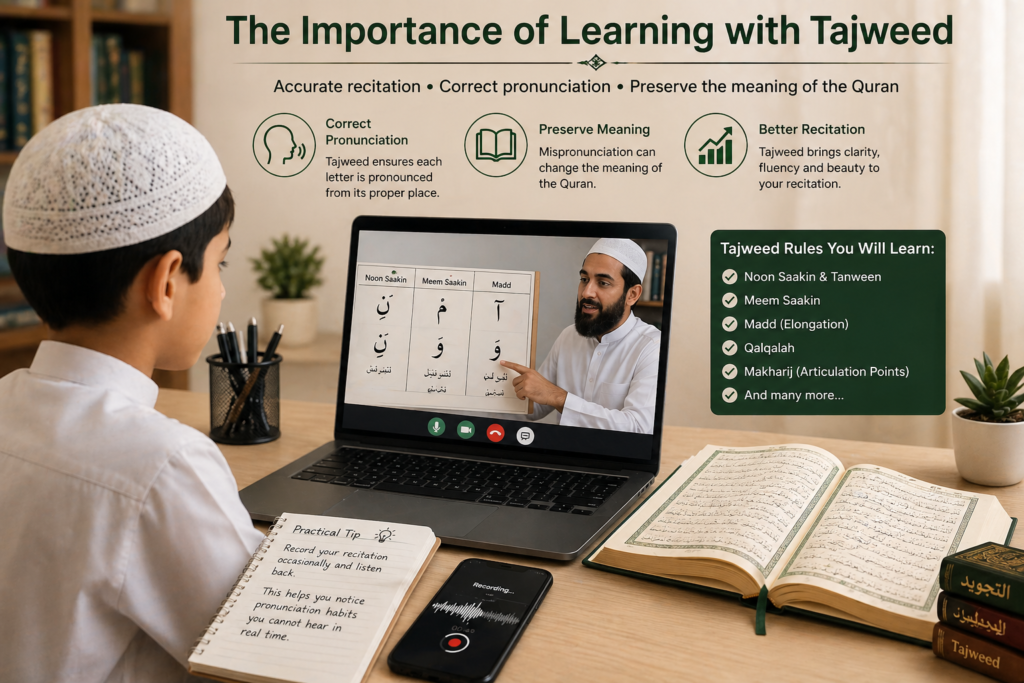
Many beginners ask whether Tajweed is strictly necessary, especially when they are still at the stage of recognizing letters. The honest answer is yes, and the earlier the better.
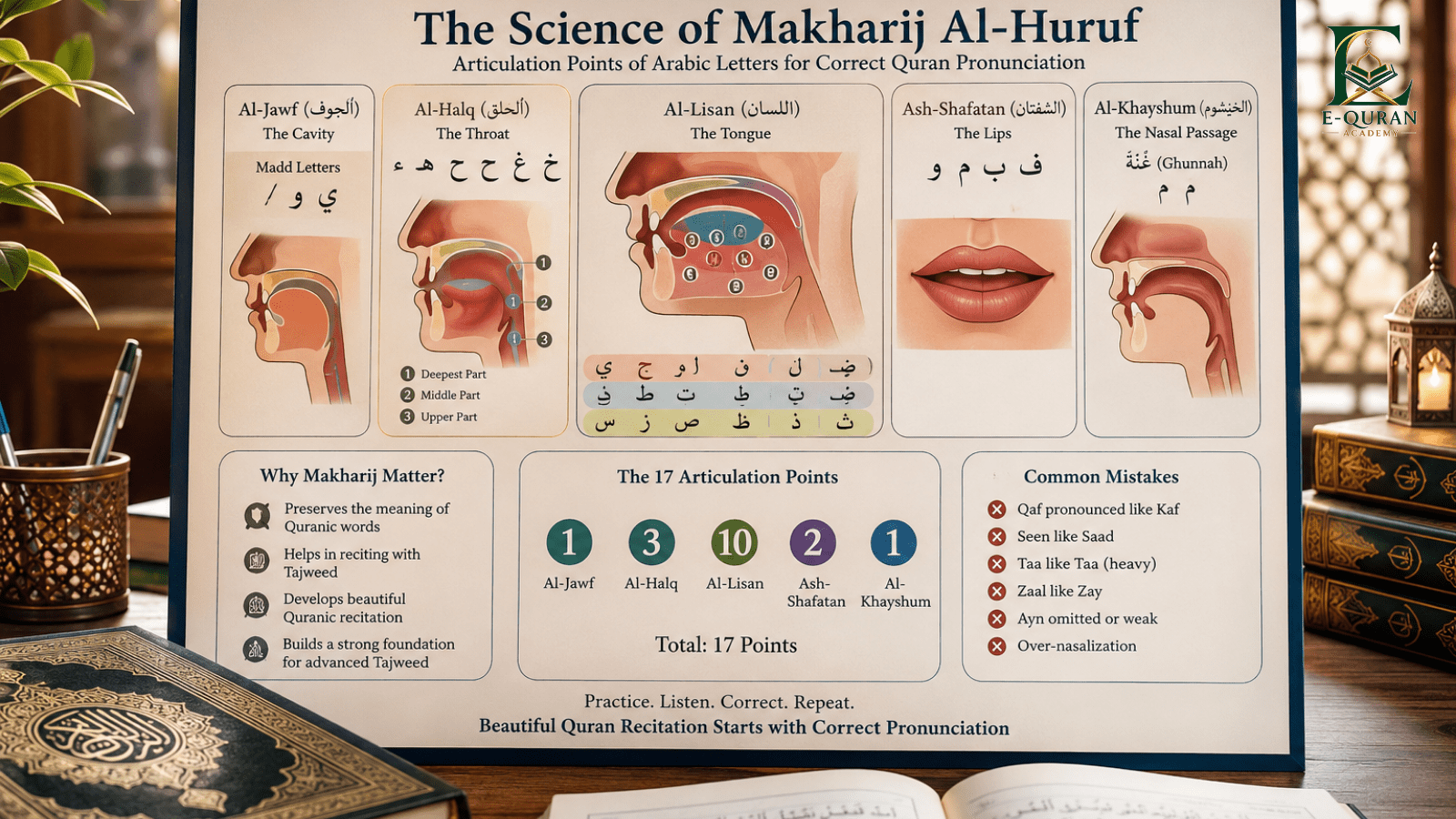
Tajweed is not about making recitation sound beautiful, although it does. It is about accuracy. The Quran is a precise text, and certain sounds, if mispronounced, can change meaning entirely. A qualified teacher who helps you learn Quran with Tajweed from the beginning will save you years of unlearning habits later.
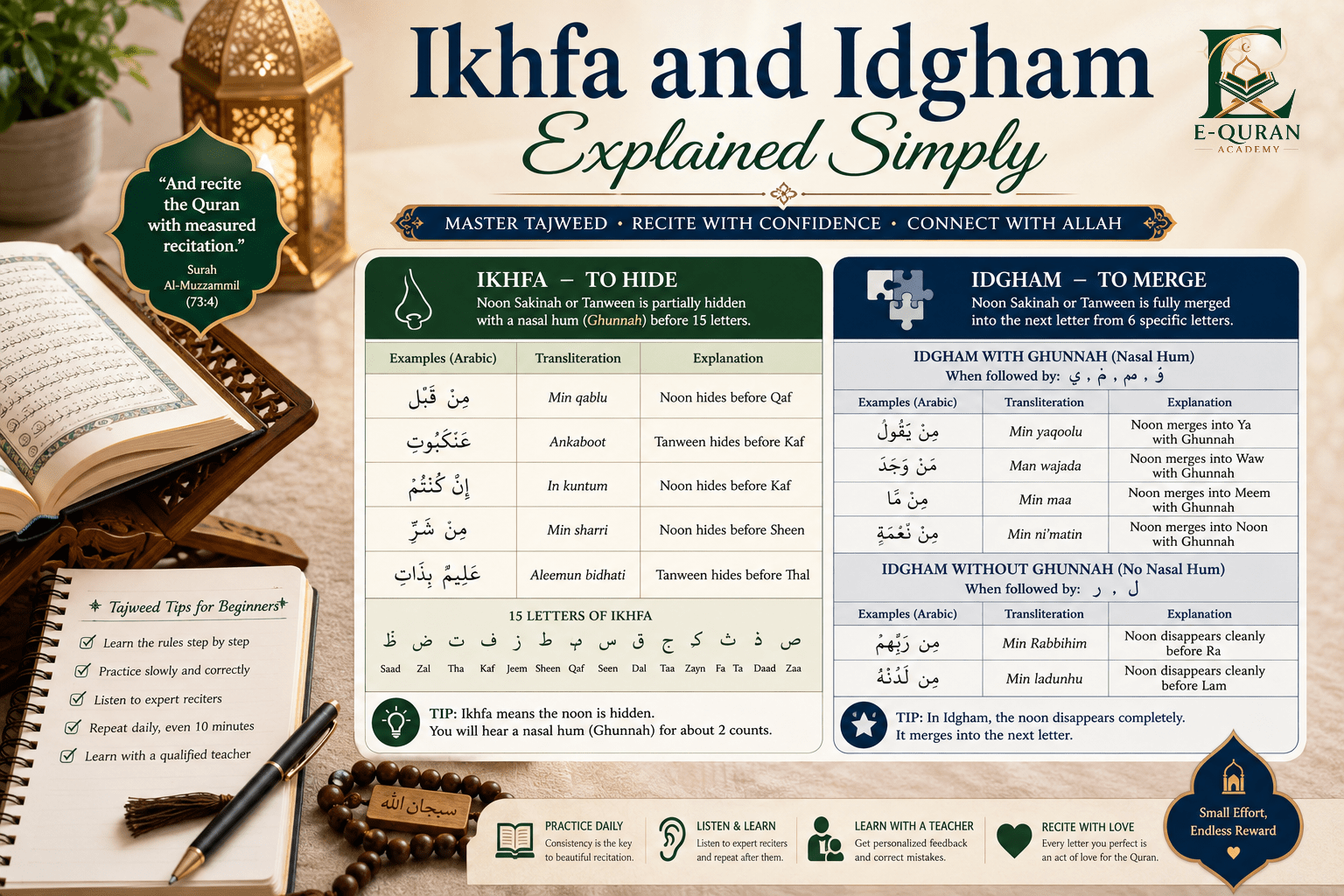
When you enroll in online Quran classes with a focus on Tajweed, your teacher will work through the rules gradually: the rules of noon saakin, meem saakin, madd, and so on. You will not be expected to master them overnight. The goal is steady, correct progress.
Practical tip
Record your recitation occasionally and listen back. It is one of the most effective ways to notice pronunciation habits you cannot hear in real time.
Quran Classes for Kids: Getting Children Started Right
If you are a parent, one of the most meaningful things you can do for your child is give them early, structured access to Quran education. Children absorb language and sound with a speed that adults genuinely envy. When introduced to Quranic Arabic young, many children develop fluency and even memorization capacity that stays with them for life.
The key for Quran classes for kids is finding a teacher who understands how children learn. That means patience, short focused lessons, engagement through repetition and encouragement, and a pace that matches the child rather than a fixed curriculum clock. Online classes offer the added benefit of learning in a safe, familiar environment where children are often more comfortable and focused than in a group setting.
At E Quran-Academy, lessons for children are structured with this in mind. Teachers are trained to work with young learners and build their confidence alongside their reading ability. Many families notice that children who struggled in group settings thrive in one-on-one online sessions.
How to Choose the Right Online Quran Academy
Not every online Quran academy offers the same quality, and this choice matters. Here is what to look for genuinely, beyond the marketing:
Qualified, native Arab teachers
The best Quran lessons online come from teachers who are not only fluent in Arabic but trained in recitation and Tajweed specifically. Ask whether teachers hold an Ijazah, the formal certification in Quranic recitation passed through an unbroken chain to the Prophet, peace be upon him.
Trial classes before commitment
A reputable online Quran academy will offer a free trial class. This gives you the chance to assess the teacher’s style, the platform’s quality, and whether the approach fits your learning personality or your child’s needs.
Flexible scheduling
Life does not pause for learning. Look for academies that offer genuine flexibility, classes in the morning, evening, weekend, that work around your actual schedule rather than a fixed timetable.
Structured curriculum
Good online Quran learning is not just informal recitation practice. There should be a clear progression from beginner to advanced, with assessments, revision, and measurable milestones.
One-on-One Quran Classes vs Group Sessions
Group classes have their place. They can build a sense of community and shared accountability. But for most learners, especially beginners and children, one-on-one Quran classes produce significantly faster and more accurate results.
When you are the only student in the room, the teacher catches every mispronunciation immediately. Feedback is instant. The lesson moves at exactly the right pace. There is no distraction from peers, and no pressure to keep up with or slow down for others. For adults who may feel self-conscious about learning something new, the privacy of a one-on-one setting can remove a genuine barrier to progress.
Building a Consistent Practice at Home
The single biggest difference between learners who progress and those who plateau is not talent. It is consistency. Twenty minutes of Quranic reading every day will take you further than two hours on a Sunday with nothing in between.
Here are a few habits that genuinely help:
Tie your Quran practice to something you already do daily. After Fajr is a time many learners find naturally focused and quiet. Keep your Quran or your app in a visible place, not buried in a folder. Tell someone about your goal, a spouse, a friend, even your teacher. Accountability is underrated. And on the days you do not feel motivated, which will come, remind yourself that even reading a few ayat with intention carries reward regardless of how the session feels.
A Note on Motivation and the Longer Road
Learning the Quran is not a sprint. It has never been meant to be. Some of the greatest scholars in Islamic history spent decades deepening their relationship with the text, and they would say the journey itself was the point.
If you are a beginner, allow yourself to be a beginner. If your child is struggling with a particular letter or rule, give them time. Learning the Quran at any age is an act of devotion, and every effort made with sincerity carries meaning far beyond the lesson itself.
What matters most is that you start, and that when you find a good teacher and a structure that works, you stay consistent. The rest follows.
Final Thoughts
Learning the Quran online at home is not a compromise. For many people, it is the best and most realistic path available, and when done well, it is deeply effective. Whether you are an adult learner returning to the Quran after years away, a parent wanting the right foundation for your child, or someone who has never read Arabic before, the resources and qualified teachers you need are genuinely accessible today.
If you are looking for a place to start, E Quran Academy offers one-on-one Quran classes online with qualified teachers, structured Tajweed programs, and flexible scheduling designed for families and individual learners at every level. A free trial class is available, and it is worth taking simply to experience what well-structured online Quran learning actually feels like.
The door is open. The first step is yours.
Ready to begin your Quran learning journey?
E Quran-Academy offers free trial classes for beginners, children, and adults. One-on-one lessons, certified teachers, flexible timing.