A few years ago, a friend of mine a practicing Muslim, prays five times a day, fasts every Ramadan came to me genuinely stressed. He’d just opened a brokerage account, bought a few shares in a tech company, and then spent the next three nights unable to sleep. Not because the market dropped. Because he suddenly wasn’t sure if what he’d done was even allowed.
“Brother, is stock trading halal or haram? I just need a straight answer.”
The truth is, there isn’t one straight answer. And that’s exactly where most Muslims get confused they want a simple yes or no, but the reality of Islamic finance is a little more layered than that. Not complicated, just nuanced. And once you understand the actual principles behind it, the answer becomes pretty clear for your own situation.
So let’s talk about it honestly.
First, Why Is This Question So Hard to Answer?
Part of the problem is that “stock trading” means different things to different people. For some, it means buying shares in a solid company and holding them for years. For others, it means glued to a screen at 9 AM, buying and selling the same stock four times before lunch.
Those are not the same thing. Not in terms of risk, strategy, or, importantly, Islamic permissibility.
The other issue? A lot of the information floating around online is either too conservative (“all stocks are haram, full stop”) or too casual (“just avoid alcohol companies and you’re fine”). Neither extreme is doing Muslims any favors.
Here’s what the Islamic perspective on the stock market actually comes down to: what you’re buying, how you’re trading, and what methods you use.
What Owning a Stock Actually Means
Strip away all the financial jargon. When you buy a share of a company, you own a tiny piece of that business. That’s it. You’re not lending money. You’re not collecting interest. You’re a partial owner.
Now ask yourself is it halal to own a business? Of course. The Prophet Muhammad ﷺ was a merchant. Trade is honored in the Quran. Profit from legitimate commerce is clean income.
So the concept of owning shares isn’t the issue. The issue creeps in depending on which business you own a piece of, and how you go about buying and selling.
The Islamic Principles You Actually Need to Know
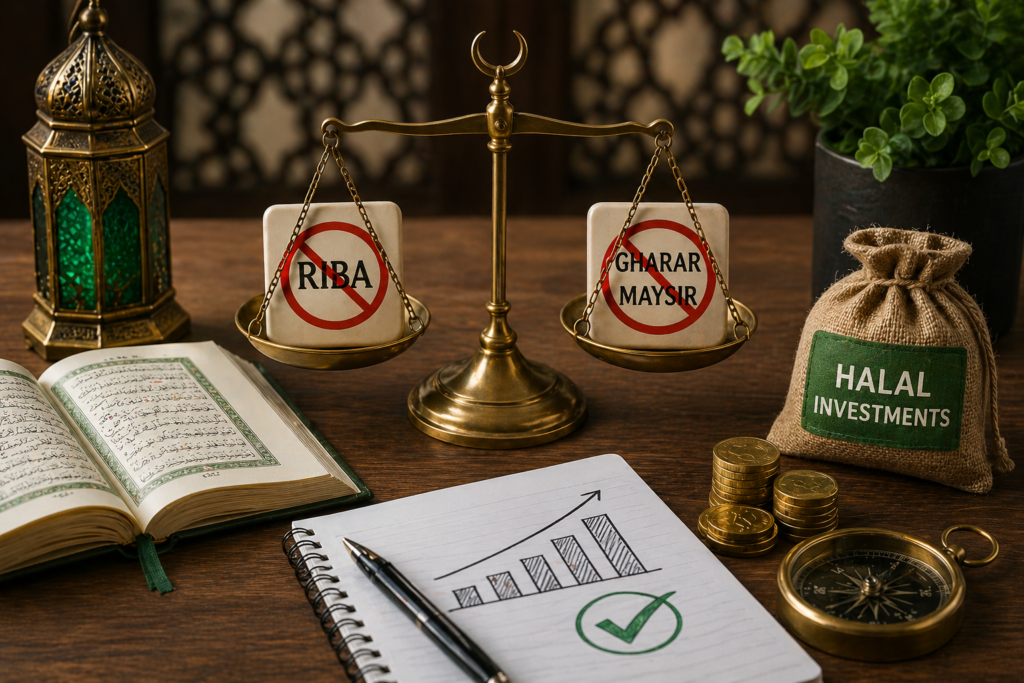
You don’t need a degree in Islamic finance to understand this. Three core things make any financial transaction cross the line:
Riba and it’s everywhere if you’re not careful. Riba means interest, and it’s one of the most clearly prohibited things in Islam. Allah doesn’t mince words about it in Surah Al-Baqarah. The problem with stocks is that riba can sneak in through margin trading (borrowing money from your broker to buy more stocks that borrowed money almost always carries interest), or through investing in companies whose primary business is interest, like conventional banks.
Gharar excessive uncertainty. This one’s trickier. Some uncertainty in business is normal and accepted. But when a transaction is built on pure speculation, where neither party has clear knowledge of what they’re exchanging or whether it’ll materialize that’s gharar. Heavily speculative trading can fall into this territory.
Maysir gambling. If your “trading strategy” is essentially a coin flip. If you’re chasing quick wins with no research, no understanding of the company, just pure luck-based bets scholars widely consider that to be gambling in spirit, even if it technically involves stocks.
Miss any of these three, and halal stock trading becomes haram. Keep these in mind, and you have a framework for most decisions.
So Can Muslims Invest in Stocks? Yes With These Conditions
Let’s get practical. For your stock investment to be Shariah compliant, you generally need to check these boxes:
The Company Has to Be Doing Something Halal
This sounds obvious, but it gets overlooked. You cannot own a piece of a company that primarily sells alcohol, produces pork products, runs gambling platforms, deals in weapons manufacturing for unethical purposes, or operates on a conventional interest model.
The word “primarily” matters here. Almost every large company has some connection to something imperfect maybe a tech conglomerate has a small financial division. Islamic scholars have generally accepted that if the impermissible portion of a company’s revenue is below a certain threshold (often around 5%), investment is permissible with purification.
Keep Debt in Check
Check the company’s financials. If a business is drowning in interest-based debt meaning they’ve borrowed heavily from conventional lenders some scholars consider investment in that company problematic. The commonly used guideline is that interest-bearing debt shouldn’t exceed 33% of the company’s market cap or total assets. Shariah-screened stock lists and halal investment apps already do this filtering for you, which is genuinely useful.
No Margin, No Leverage
This is a hard line for most scholars. Don’t borrow from your broker to amplify your trades. It introduces riba directly. Trade with your own money only.
No Short Selling
Short selling means selling shares you don’t own, betting they’ll drop in price, then buying them back cheaper. Beyond the obvious speculation problem, you’re selling something you don’t possess which Islam explicitly prohibits in trade.
Is Day Trading Halal? Here’s the Honest Take
This question comes up constantly, and most people don’t get a satisfying answer.
Day trading buying and selling within the same day or across very short time frames sits in uncomfortable territory. Here’s why:
The intent behind most day trading is pure price speculation. You’re not interested in the company. You don’t care what they make or whether they’re ethical. You just want the stock to move up two rupees so you can flip it. That intent, stripped of any real commercial purpose, starts to resemble maysir.
There’s also a fiqh issue around ownership. Some scholars argue that for a sale to be valid, you must have taken proper possession of what you’re buying before you sell it again. In modern stock markets, settlement can take time so very rapid buy-sell cycles raise questions about whether real ownership transfer happened.
My honest opinion? Long-term investing in Shariah-compliant stocks is the cleaner path by far. Day trading, even if someone builds a technical argument for it being permissible, creates a lifestyle of anxiety, speculation, and detachment from the real economy. It’s not just about what’s technically allowed it’s about what’s spiritually healthy too.
What About Halal Investment Alternatives?
If stocks still feel uncertain to you, there are other avenues worth knowing:
Sukuk are Islamic bonds. Instead of earning interest, you earn a share of the profit from a real underlying asset. They’re structured to avoid riba entirely.
Islamic REITs let you invest in real estate portfolios through Shariah-compliant structures no interest-based mortgages involved.
Halal mutual funds are probably the easiest entry point for most people. Fund managers do the screening for you, filter out haram stocks, and handle purification. If you want exposure to markets without doing all the research yourself, this is worth exploring.
Direct business partnership Mudarabah and Musharakah models are genuinely the most Islamic forms of investment. You put money into a real business, share in its profits and losses, and have a transparent stake in something productive. Harder to access than clicking “buy” on an app, but more aligned in spirit.
A Word on Purification Most People Skip This
Even with Shariah-screened stocks, a tiny percentage of income might come from impermissible sources. Scholars who permit investment in these companies usually require that you donate that percentage of your dividends to charity. If a company earns 2% of its income from something haram, you give away 2% of your dividends.
It’s a small act, but it matters. It keeps your conscience clean and your income spiritually sound. Most halal investment platforms will even calculate this for you automatically now.
Building Knowledge Alongside Wealth
Here’s something I genuinely believe: you can’t make good Islamic financial decisions in isolation from deeper Islamic understanding. When you know why riba is forbidden not just that it is your financial choices change. When you understand the Quranic values around trade, justice, and honest dealing, you start seeing your investments differently.
That’s why platforms like E Quran Academy matter beyond just religious basics. Learning Quran and Islamic principles isn’t separate from practical life it’s the foundation for navigating it. When Muslims root their daily decisions in knowledge, the anxiety my friend felt disappears. Not because the questions go away, but because you have the tools to answer them.
Where Does This Leave You?
Stock trading in Islam isn’t haram by default. It’s haram when it involves interest, gambling, deception, or investment in forbidden industries. Keep your trading clean of those, and you’re in permissible territory.
Long-term investing in Shariah-compliant companies is genuinely fine. Be cautious with day trading. Avoid margin and short selling entirely. Do your screening, do your purification, and keep your intention honest.
And if you’re still unsure about a specific investment? Ask a qualified Islamic scholar. Not a forum post, not a YouTube comment. An actual scholar who understands both fiqh and modern finance. They exist, and their guidance is worth seeking.
Your wealth is yours to grow just do it in a way that lets you sleep at night. My friend eventually found a halal fund, moved his investment there, and the anxiety dissolved. Not because he stopped investing. Because he knew what he was doing was clean.
That clarity is available to all of us.
Frequently Asked Questions
Is the stock market halal in Islam? The stock market itself is a mechanism it’s not inherently halal or haram. What you do within it determines the ruling. Investing in Shariah-screened companies through permissible methods is generally considered halal by most contemporary scholars.
Can Muslims invest in stocks without any conditions? No. The type of company, the trading method, and the use of leverage all affect permissibility. Blind investment without screening isn’t advisable from an Islamic standpoint.
Is day trading halal or haram? Most scholars are cautious about day trading due to its speculative nature and questions around ownership transfer. Long-term investing is generally the safer choice under Islamic rulings on trading.
What is purification in halal stock trading? Purification means donating the percentage of your dividend income that came from any impermissible activity within a mixed-income company. It keeps your overall income halal even when perfect screening isn’t possible.
Where do I start with halal investment options in Islam? Look into Shariah-screened ETFs, halal mutual funds, or sukuk as starting points. Apps and platforms now exist specifically for Muslim investors that handle the screening and purification process automatically.
This post is for informational purposes only and not a formal fatwa. For personal financial decisions, please consult a qualified Islamic scholar.