A Complete Guide | History, Character, Legacy | ~8 min read
The Man Who Changed the World
There are very few figures in human history whose impact reaches across every continent, every century, and every aspect of life. Prophet Muhammad, peace be upon him, is one of them. He was born in the 6th century in the city of Makkah, in the Arabian Peninsula, into a world of deep inequality, spiritual confusion, and social cruelty. By the time he passed from this world sixty three years later, he had transformed not just Arabia, but the course of human civilisation.
This is not a statement of religious devotion alone. It is a historical fact acknowledged by scholars, historians, and thinkers across cultures and faiths. He built a community from scratch, established principles of justice and human dignity, and left behind a complete way of life that more than a billion people follow today.
Understanding his life is not just important for Muslims. It is important for anyone who wants to understand how the world became what it is. This guide covers his birth, his mission, his character, and his lasting legacy in a way that is honest, clear, and respectful.
Early Life: Before the Revelation
Muhammad, peace be upon him, was born in Makkah around 570 CE, in what is known as the Year of the Elephant. His father, Abdullah ibn Abd al-Muttalib, had already passed before he was born. His mother, Aminah bint Wahb, passed away when he was just six years old. He was raised first by his grandfather Abd al-Muttalib, and then, after his grandfather also passed, by his uncle Abu Talib.
Even before prophethood, the people of Makkah recognised something extraordinary in him. They called him Al-Amin, the trustworthy one, and As-Sadiq, the truthful one. In a society where dishonesty in trade and tribal boasting were common, he stood apart. People trusted him with their money, their secrets, and their disputes.
At the age of twenty five, he married Khadijah bint Khuwaylid, a respected and successful businesswoman fifteen years his senior. She had employed him to manage her trade caravans and was so impressed by his integrity that she proposed marriage. Their partnership was built on love, mutual respect, and deep trust. She would later become the first person to believe in his prophethood, and he described her as the best of the women of her time.
| HISTORICAL CONTEXT. Before Islam, the Arabian Peninsula had no unified state, no courts of justice for the poor, and a society in which women, slaves, and orphans had almost no rights. Into this world came a man who would overturn every one of those conditions. |
The Revelation and the Beginning of Prophethood
When he was forty years old, Muhammad, peace be upon him, was in the habit of retreating to a cave called Hira on the outskirts of Makkah, to reflect and pray in solitude. It was during one of these retreats, in the month of Ramadan in the year 610 CE, that the Angel Jibreel appeared to him and delivered the first words of the Quran: Read in the name of your Lord who created.
He returned home shaken and told Khadijah what had happened. Without hesitation, she wrapped him in a cloak and said words that remain among the most beautiful in Islamic history. She said that Allah would never humiliate a man who upheld the ties of family, spoke truth, helped the weak, honoured his guests, and supported people in genuine hardship. She was the first Muslim.
For the next twenty three years, revelation continued to come to him. The complete Quran was gradually revealed, memorised by his companions, and written down under his supervision. It remains unchanged to this day, word for word as it was received.
Key Events in His Life: A Complete Timeline
The life of the Prophet, peace be upon him, unfolded across remarkable events, each carrying profound lessons. Below is a full timeline of the most significant moments.
Life of Prophet Muhammad (PBUH): Full Historical Timeline
| Year | Event | Details |
|---|---|---|
| 570 CE | Birth in Makkah | Born in the Year of the Elephant to the noble Banu Hashim clan of the Quraysh. |
| 576 CE | Orphaned by age six | His father passed before his birth. His beloved mother Aminah passed when he was six. |
| 595 CE | Marriage to Khadijah (RA) | Married the respected businesswoman Khadijah bint Khuwaylid at the age of 25. |
| 610 CE | First revelation | In the Cave of Hira, Angel Jibreel brought the first verses of the Quran. |
| 613 CE | Public preaching begins | The Prophet began calling the people of Makkah openly to the worship of one God. |
| 615 CE | Migration to Abyssinia | The first Muslims migrated to seek safety under the just Christian king Negus. |
| 619 CE | Year of Grief | Both Khadijah (RA) and his uncle Abu Talib passed away, leaving the Prophet deeply tested. |
| 620 CE | Night Journey (Isra Miraj) | The miraculous night journey to Jerusalem and ascent through the heavens. |
| 622 CE | Hijra to Madinah | The turning point. The Muslim community emigrated to Madinah and a new era began. |
| 624 CE | Battle of Badr | The first major battle of Islam. Against all odds, the Muslims were victorious. |
| 628 CE | Treaty of Hudaybiyyah | A peace agreement that opened the way for the spread of Islam across Arabia. |
| 630 CE | Conquest of Makkah | Makkah was entered peacefully. The Prophet forgave those who had persecuted the Muslims. |
| 632 CE | The Farewell Pilgrimage | His final Hajj. He delivered his last sermon to over 100,000 pilgrims at Arafat. |
| 632 CE | Passing from this world | He passed in Madinah at the age of 63. His legacy continues to guide billions. |
The Hijra: A Turning Point in History
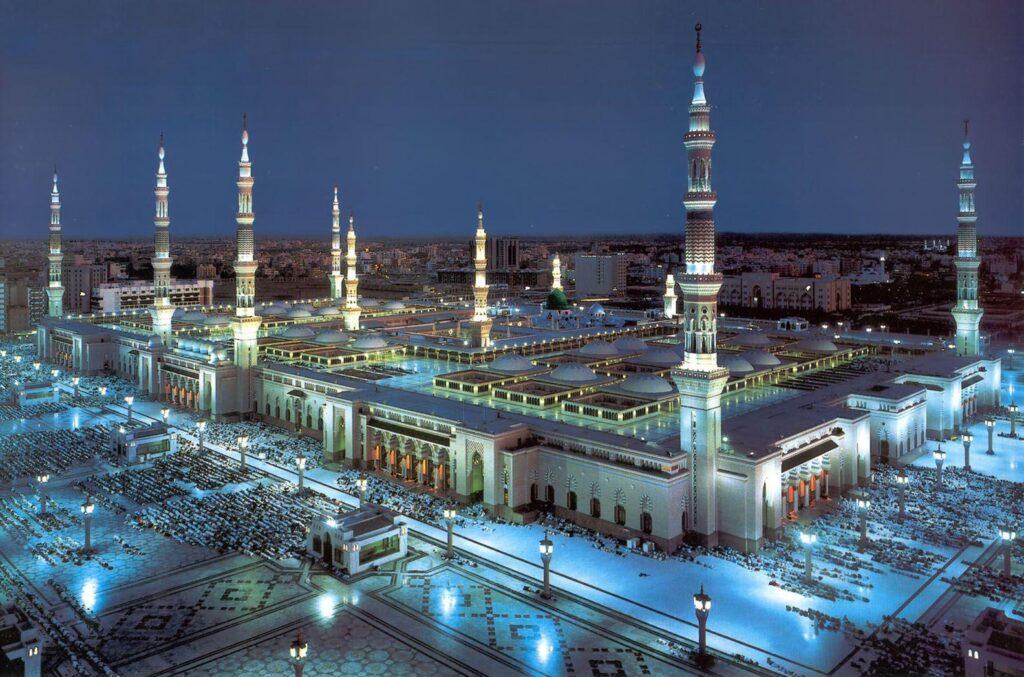
In 622 CE, after years of persecution in Makkah, the Prophet and his companions made the migration to Madinah. This event, known as the Hijra, is so significant that the Islamic calendar begins from this year. It was not simply a move from one city to another. It was the moment when the Muslim community transitioned from a persecuted minority to a community with the freedom and structure to build a just society.
In Madinah, the Prophet established the first written constitution in the world, the Constitution of Madinah. It established rights for Muslims, Jews, Christians, and pagans alike. It created a framework of mutual defence and civic responsibility between different tribes and religions. Many historians consider it a foundational document in the history of pluralistic governance.
His years in Madinah were not without hardship. Battles, betrayals, grief, and political challenges tested the community repeatedly. But through all of it, the Prophet demonstrated a quality of leadership that combined courage with mercy, firmness with forgiveness, and vision with practicality.
His Character: The Man Behind the Message
What made the Prophet, peace be upon him, so compelling was not just the message he carried but the man who lived it. His character was the Quran in practice. The people closest to him, his family, his companions, those who watched him in moments of difficulty and ease alike, consistently described the same qualities.
Character of the Prophet (PBUH): Six Defining Qualities
| Character Trait | How It Was Shown |
|---|---|
| As-Sadiq (The Truthful) | He never lied, not even before prophethood. Even his enemies trusted his word completely. |
| Al-Amin (The Trustworthy) | People of Makkah kept their valuables with him. Trust defined every interaction he had. |
| Rahma lil Alameen | A mercy to all worlds, as Allah described him in the Quran. His compassion extended to enemies, animals, and children. |
| Forbearance under hardship | Stoned at Taif, mocked in Makkah, losing loved ones. He never responded with hatred or bitterness. |
| Humility in leadership | He mended his own clothes, milked goats, helped his family, and sat on the ground with the poor. |
| Justice for all people | He declared that if his own daughter were to steal, he would apply the law equally to her. |
He was not a distant or remote figure. He sat with the poor. He visited the sick. He accepted invitations from slaves. He played with children. He was known to weep in prayer out of awe for Allah. He laughed with his companions. He was fully, beautifully human while carrying a message that was divine.
His Mission: What He Came to Establish
The Prophet, peace be upon him, did not come to build an empire or to gain personal power. He came as a messenger. His mission had four pillars that are as relevant today as they were fourteen centuries ago.
The Four Pillars of His Mission
| 01 Tawheed: Oneness of Allah. The entire message rested on this single foundation. Allah is One, with no partners, no equals, and no intermediaries. | 02 Equality of all human beings. He declared that no Arab is superior to a non-Arab, and no white person is superior to a black one, except in righteousness. |
| 03 Establishment of justice. He built a society in Madinah where the weak had rights, the orphan was protected, and the ruler was accountable to the law. | 04 Quran as eternal guidance. He delivered the words of Allah exactly as revealed and lived them as a walking example for every generation that followed. |
The Farewell Sermon: His Final Words to the World
In 632 CE, the Prophet, peace be upon him, performed his final Hajj. At the plain of Arafat, surrounded by more than one hundred thousand of his companions, he delivered a sermon that stands as one of the greatest speeches in human history. He declared the end of all forms of racial superiority. He established the rights of women. He confirmed the sanctity of life and property. He instructed his followers to treat all human beings with dignity.
| FROM HIS FAREWELL SERMON. All mankind is from Adam and Eve. An Arab has no superiority over a non-Arab, nor does a non-Arab have any superiority over an Arab. A white person has no superiority over a black person, nor does a black person have any superiority over a white person, except by piety and good action. |
He then asked the gathered crowd: Have I conveyed the message? And they replied: Yes, you have. He raised his finger to the sky and said: O Allah, be my witness.
A few months later, he passed from this world in the arms of his wife Aisha (RA), in the city of Madinah. He was sixty three years old. The companions were stunned. Umar ibn al-Khattab initially refused to believe it. It was Abu Bakr (RA) who stood up and reminded the community with words that still echo: Whoever worshipped Muhammad, let him know that Muhammad has died. Whoever worshipped Allah, let him know that Allah is living and will never die.
His Legacy: Why He Still Matters Today
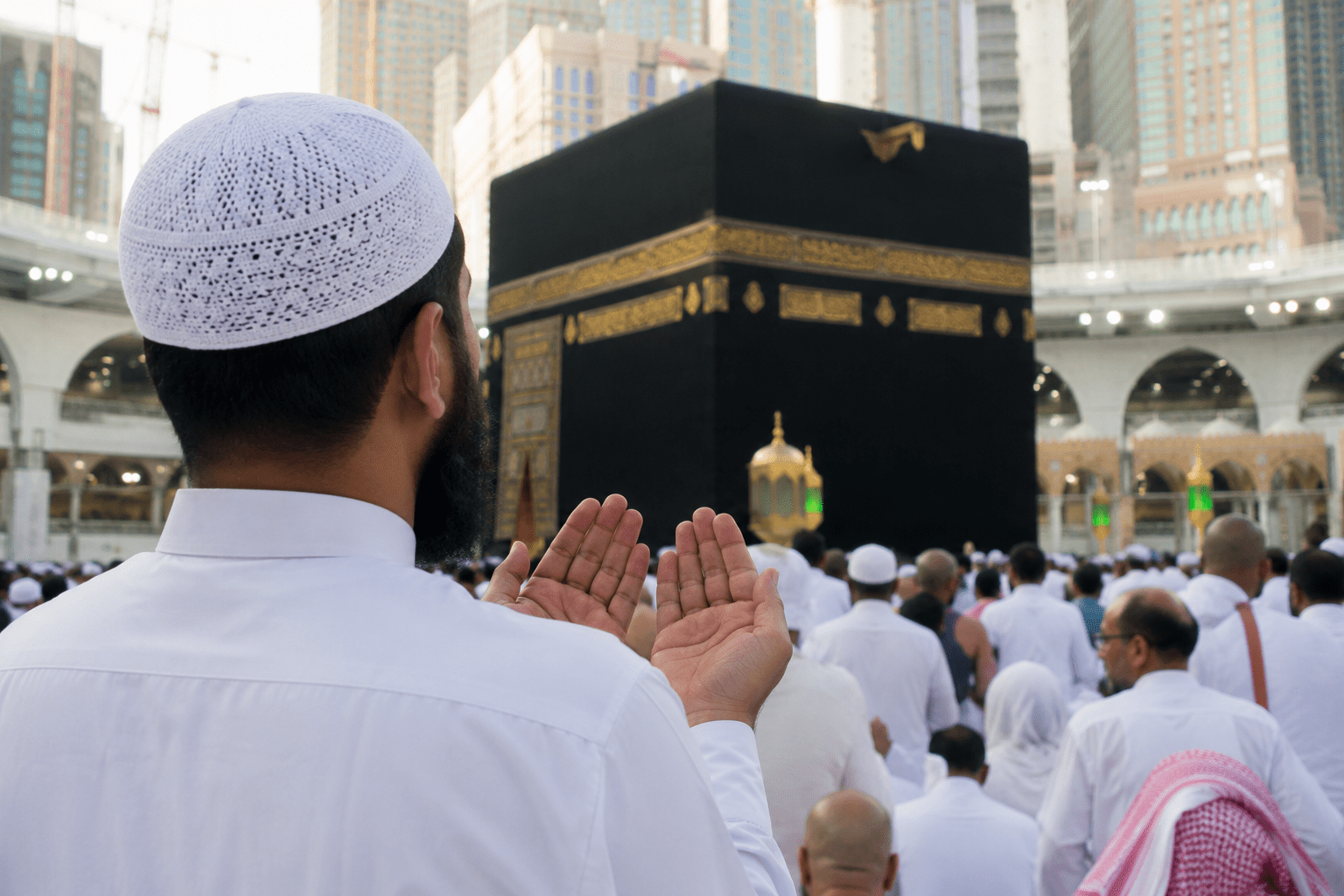
More than 1.8 billion Muslims today follow the guidance he left behind. Every day, across every continent and every time zone, someone is turning to face Makkah and praying in the way he demonstrated. Babies are given names he praised. Children are taught the words he memorised. Families are built on the principles he established.
His legacy is not just religious. The educational institutions that preserved and advanced human knowledge during the Islamic Golden Age grew directly from his emphasis on learning. The principles of justice he laid down influenced legal systems across the world. His treatment of prisoners of war, minority communities, and women was ahead of almost every civilisation of his time.
He is the most studied human being in history. His words, his habits, his preferences, his prayers, and even his sleep patterns are documented in extraordinary detail in the hadith literature. No figure from the ancient world has left behind such a comprehensive and humanly accessible record.
| A REFLECTION FOR TODAY. In a world still struggling with inequality, tribalism, and injustice, the life of the Prophet (PBUH) offers not just religious guidance but a practical and deeply human model of how to live with integrity, purpose, and compassion. |
Final Thoughts
The life of Prophet Muhammad, peace be upon him, is a story of extraordinary courage, breathtaking compassion, and unshakeable faith. He did not come from wealth. He did not have political power at the start. He had no army, no palace, and no following except a small group of people who believed in his honesty and his message.
What he built over twenty three years of prophethood changed the world. And what he left behind, the Quran and his example, continues to guide, comfort, and inspire more than a billion people every single day.
To study his life is to understand not just Islamic history, but the remarkable story of a man who showed what a human being can truly be when they live for something greater than themselves.
| Want to learn more about Islam and the Quran from home? E Quran Academy offers one on one online Quran and Islamic studies classes for adults and children, with certified teachers, flexible timing, and a free trial session. |