A Practical Guide for Every Muslim · ~6 min read
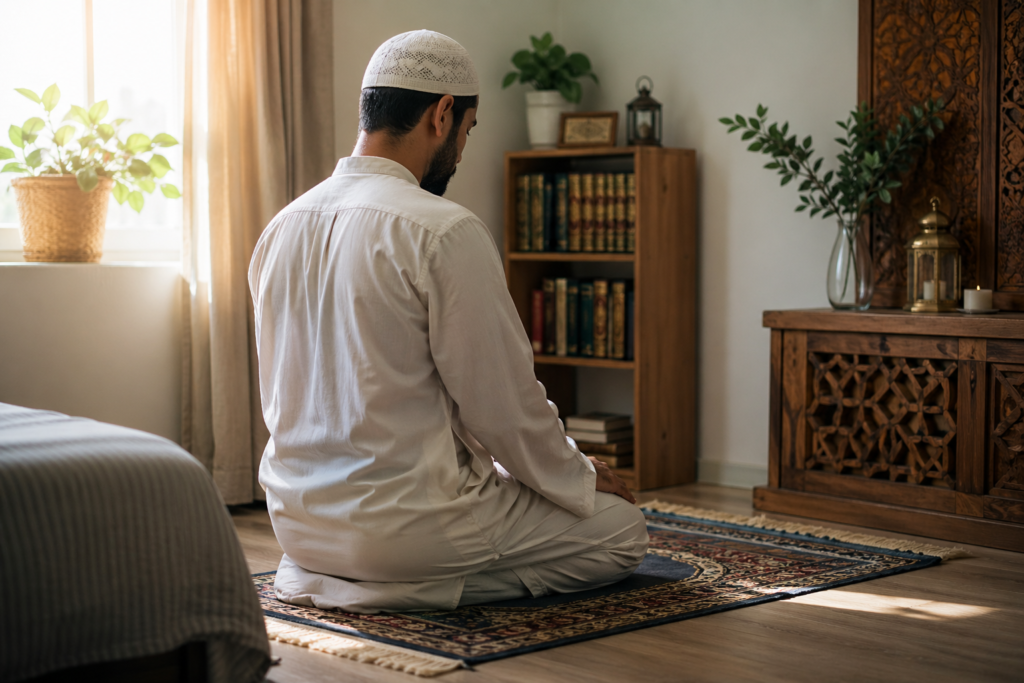
Most of us want to be better Muslims. We feel it in quiet moments, after Fajr when the house is still, or at night when we put the phone down and wonder whether we used the day well. The desire is real. What is often missing is not intention it is structure.
The Prophet Muhammad ﷺ, peace be upon him, lived with a daily rhythm that was intentional in every detail. From the moment he woke to the moment he slept, his actions were guided by purpose. These actions his daily Sunnah routine are not just historical records. They are a living guide, one that any Muslim today can follow to bring more meaning, peace, and barakah into ordinary life.
This is not about perfection. It is about building habits one Sunnah at a time that slowly transform your day from the inside.
What Is Sunnah and Why Does It Matter?
The word Sunnah refers to the teachings, practices, and habits of the Prophet ﷺ, peace be upon him. These are recorded in hadith and preserved across generations. Following the Sunnah is not an obligation in the same way that the five pillars are, but it is deeply encouraged. Every Sunnah act carries reward. More than that, it connects you to someone whose character Allah described as the greatest example for humanity.
When you follow the Sunnah in your daily routine, you are not just adding religious rituals to your schedule. You are living with intention. You are transforming eating, sleeping, speaking, and even entering your home into acts of worship.
“There has certainly been for you in the Messenger of Allah an excellent pattern.” Surah Al-Ahzab, 33:21
Morning Sunnah Practices
The morning sets the tone for everything that follows. The Prophet ﷺ, peace be upon him, emphasized waking early, particularly for Fajr prayer, and beginning the day with remembrance of Allah.
Wake Up for Fajr
This is the anchor of the Muslim morning. Fajr prayer is one of the most spiritually significant acts of the day. The Prophet described those who pray Fajr as being under the protection of Allah throughout the day. Waking early also aligns with something modern science confirms: morning hours are more focused, calm, and productive.
Start with Morning Adhkar
Upon waking, the Sunnah is to recite the dua of waking: Alhamdulillah alladhi ahyana ba’da ma amatana wa ilayhin nushur. It takes seconds. But it begins your day by acknowledging gratitude before the first notification on your phone does anything else to your attention.
Use the Miswak
The miswak, a natural teeth-cleaning stick, was one of the Prophet’s consistent morning practices. He described it as purifying for the mouth and pleasing to Allah. Whether you use a miswak or brush your teeth with intention, this small act connects the body to the Sunnah from the very start of the day.
Drink Water on an Empty Stomach
The Sunnah encourages drinking water slowly, seated, and in three sips. This is something nutritionists today also recommend for digestion and metabolism. The overlap between Sunnah and wellbeing appears throughout the Prophet’s lifestyle because his habits were always rooted in what is genuinely good for the human being.
Your Daily Sunnah at a Glance
| Time | Sunnah Practice | Key Action |
|---|---|---|
| Morning | Fajr + Adhkar | Pray Fajr, recite morning dua, use miswak, drink water seated |
| Midday | Sunnah of Dhuhr + Eating | Four Sunnah before Dhuhr, begin meals with Bismillah, eat with right hand |
| Afternoon | Qaylulah + Asr | Short rest after Dhuhr; pray Asr on time |
| Evening | Maghrib + Evening Adhkar | Recite evening adhkar after Maghrib as spiritual protection |
| Night | Isha + Witr + Sleep | Pray Witr, sleep in wudu on right side, recite Ayatul Kursi |
Sunnah Practices Throughout the Day
How You Eat
The Prophet, peace be upon him, had a very clear relationship with food. He always began with Bismillah. He ate with his right hand. He never criticized food if he liked something he ate it, and if he did not, he left it quietly. He avoided overeating and described filling only one third of the stomach as ideal. This is not a diet plan. It is a framework of mindfulness around one of the most habitual parts of our day.
How You Enter and Leave the Home
The Sunnah of entering the home begins with saying Bismillah, then giving salaam, even if no one appears to be there. Leaving the home has its own dua: Bismillahi tawakkaltu ‘alallah, wa la hawla wa la quwwata illa billah. These short acts frame every transition in your day with intention and reliance on Allah.
Greeting with Salaam
The Prophet said that spreading salaam is one of the best things a Muslim can do. Saying Assalamu Alaikum to someone you know and even to strangers creates connection, warmth, and reward. It is perhaps the simplest Sunnah to revive, and one of the most powerful for building community.
The Sunnah Prayers
Alongside the five obligatory prayers are a set of regular Sunnah prayers. Two before Fajr. Four before Dhuhr and two after. Two after Maghrib. Two after Isha. The Prophet described the twelve daily Sunnah rakats as building a house in Jannah for the one who prays them consistently. These take perhaps fifteen extra minutes spread across the day. The return, in this life and the next, is extraordinary.
PRACTICAL TIP Do not try to adopt every Sunnah at once. Pick one or two from the morning, practice them for two weeks until they feel natural, then add the next. Consistency in small acts is more beloved than intensity that does not last.
Evening and Night Sunnah
The evening is a time of gathering, reflection, and preparation for rest. The Prophet ﷺ, peace be upon him, gave the night its own set of beautiful practices.
Evening Adhkar after Maghrib
Just as morning adhkar protect the hours of the day, evening adhkar after Maghrib are a shield for the night. Reciting Ayatul Kursi, the three Quls, and specific duas takes around five minutes and forms a spiritual boundary around your evening.
Quality Time with Family
The Prophet was known for his warmth at home. He helped with household tasks. He joked with his family. He listened. The home was not just a place he returned to; it was a place he invested in. This Sunnah is one that changes families when it is practiced sincerely.
Sleep Sunnah
Before sleeping: make wudu, sleep on your right side, recite Ayatul Kursi, the three Quls, and say SubhanAllah, Alhamdulillah, and Allahu Akbar thirty-three times each. These are the Sunnah of Fatimah, which the Prophet taught personally to his daughter when she asked for help with tiredness. The Prophet said it is better than a servant.
The Bigger Picture: Sunnah as a Way of Living
When you look at the daily Sunnah as a whole, something becomes clear. It is not a list of isolated religious tasks. It is a complete system for living with dignity, health, gratitude, and connection to Allah throughout every part of the day.
The morning begins with remembrance. Meals are eaten with mindfulness and thankfulness. Movement through the day is punctuated with prayer. The home is a place of peace. The night ends in the same state it began: with the name of Allah on your lips.
This rhythm does not require wealth, status, or any particular circumstance. It requires only intention and a willingness to try. And when you miss a day, or a week, you simply begin again. That too is a Sunnah returning.
How to Start Today
You do not need a complete overhaul. You need one decision. Choose a single Sunnah from this guide that feels manageable right now. Maybe it is the morning adhkar after Fajr. Maybe it is the dua before leaving the house. Maybe it is simply beginning your meals with Bismillah and eating with your right hand.
Start there. Do it every day. Let it become part of who you are. Then add another.
The Prophet, peace be upon him, said the most beloved deeds to Allah are those done consistently, even if they are small. This is not about doing everything. It is about doing something every day, with sincerity.
That is how a routine becomes a life. And that is the beauty of the Sunnah.Want to deepen your Islamic knowledge at home? E Quran Academy offers flexible online Quran and Islamic studies classes for adults and children, with qualified teachers and one-on-one sessions tailored to your level. Visit equran-academy.com to book your free trial class