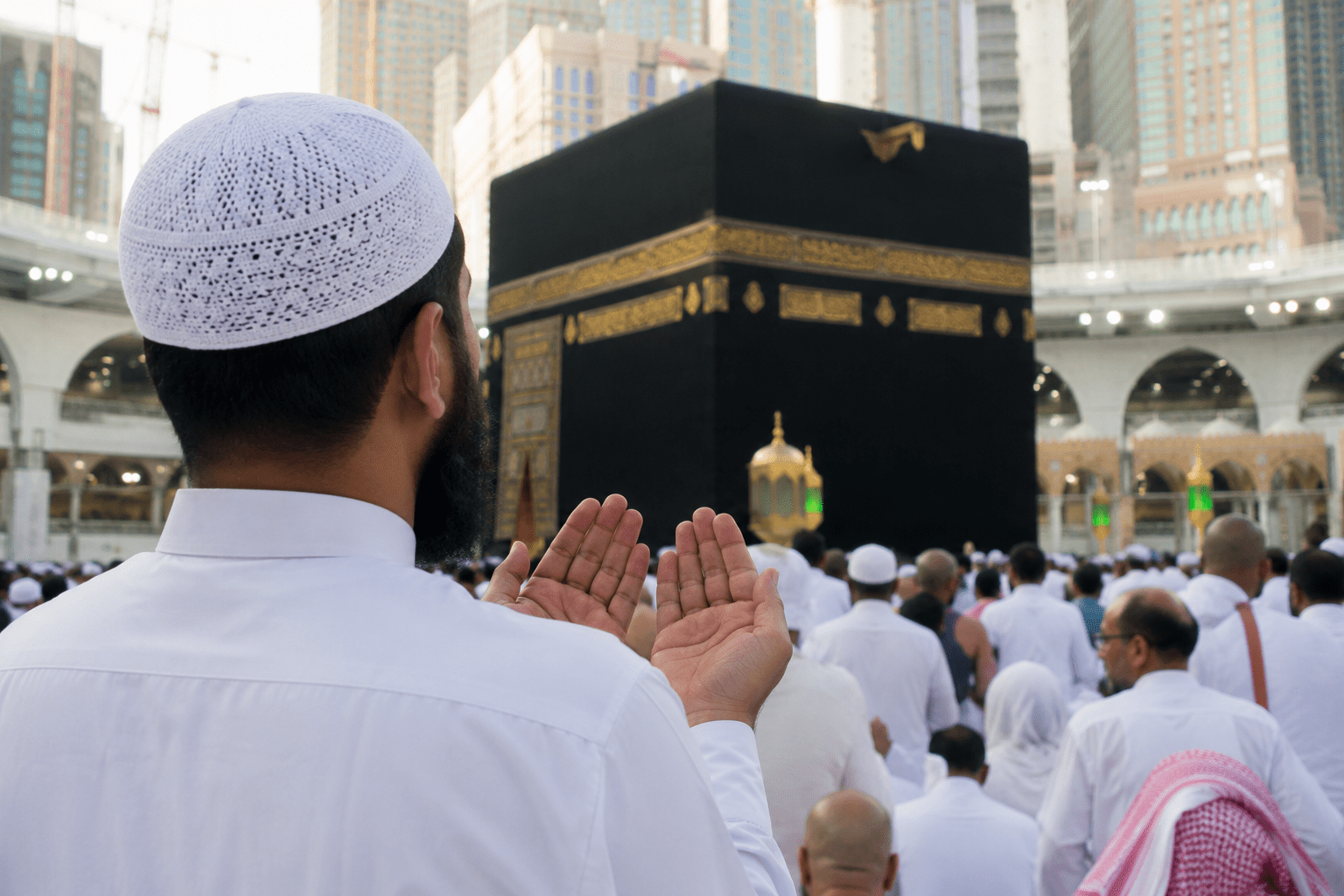
What Really Happened and What Muslims Can Learn From It Today.
Most of us grew up hearing the name “Badr” in Friday khutbahs or Islamic studies class. We knew it was important. We knew Muslims won. But somewhere between the textbook facts and the dramatic retellings, the real weight of this event never quite landed.
So let me try a different approach.
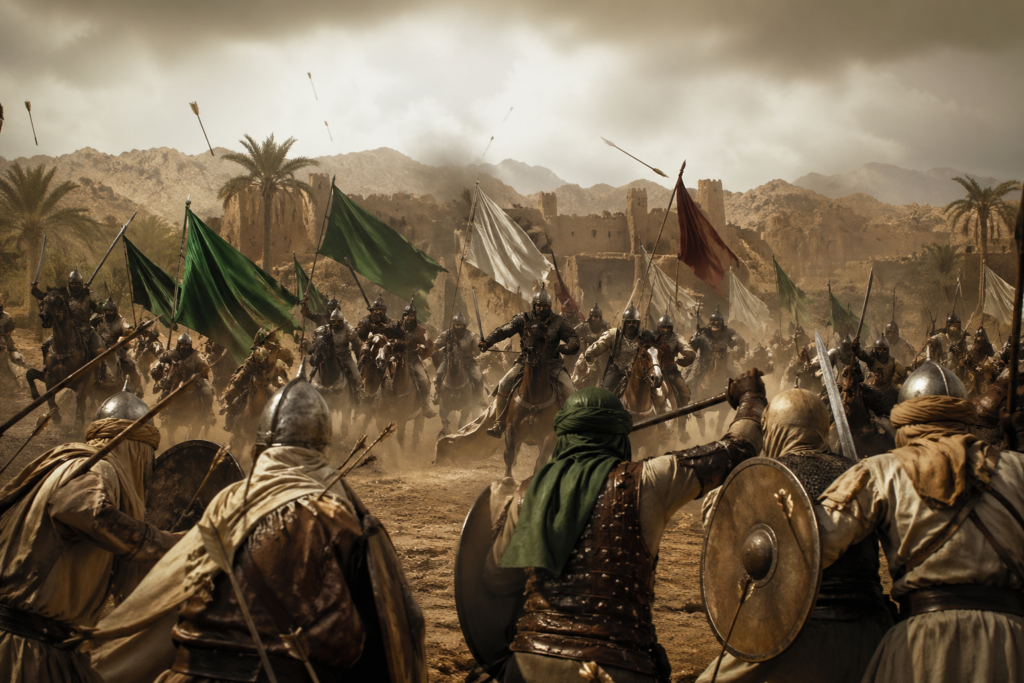
Forget the formal tone for a moment. Forget the dates and footnotes. Just picture 313 men standing in the open desert heat of Ramadan, staring across at nearly a thousand armed warriors. Their mouths were dry from fasting. Their weapons were few. Some of them had never fought before in their lives.
And they won.
That is the Battle of Badr. And once you understand why they won, you will never look at your own struggles the same way again.
First, the Basics When, Where, and Why.
The Battle of Badr took place on 17 Ramadan, 2 AH, which falls on March 13, 624 CE. So when people ask when was the Battle of Badr fought, the answer is in the second year after the Prophet’s migration to Madinah, right in the middle of Ramadan.
The location was a valley called Badr, about 80 miles from Madinah, known mostly as a stop along trade routes. There were wells there. That detail matters, as you will see.
As for why it happened the story does not start with swords.
After years of brutal persecution in Makkah, the early Muslim community had migrated to Madinah with almost nothing. The Quraysh, Makkah’s ruling tribe, had seized whatever property the Muslims left behind. There was ongoing hostility, economic pressure, and constant threats. The Muslims were not living in peace. They were living on edge.
When news came that a massive Quraysh trade caravan was passing nearby, led by Abu Sufyan, the Prophet ﷺ mobilized a small group to intercept it. Not to kill anyone. The goal was to recover some of what had been taken. But Abu Sufyan found out and changed his route. He also sent an urgent message to Makkah: send an army.
The Quraysh sent close to a thousand men. They came with drums, servants, and the kind of confidence that comes from never having lost.
313 vs. 950 What the Numbers Actually Mean.
How many Quraysh were in the Battle of Badr? Historians place the number between 950 and 1,000, which included experienced fighters, horses, and full armor.
The Muslim side had 313 men, 70 camels shared among them, 2 horses, and enough weapons for maybe half the group.
By any normal military logic, this should have been a massacre. The Quraysh had more men, better weapons, full stomachs, and years of fighting experience. They were not expecting a fight. They were expecting to send a message.
What they did not account for was what was happening inside those 313 men.
The night before the battle, the Prophet Muhammad ﷺ stood in prayer for hours, raising his hands and weeping before Allah. His companions described the sound of his supplication as something they had never heard before. He was not performing. He was genuinely terrified of losing these people. He loved them. And he poured that love into prayer.
That night, rain fell on the battlefield. Light rain on the Muslim side, softening the sand so they could move. Harder rain on the Quraysh side, turning the ground into mud. A small detail, but one the Quran itself mentions.
What the Quran Says About Badr
The Battle of Badr in the Quran is addressed primarily in Surah Al-Anfal, the 8th chapter, which was revealed after the battle. Allah speaks directly about what happened, what the believers were feeling, and what He did for them.
One verse that still stops people in their tracks:
“And already had Allah given you victory at Badr while you were few in number. So fear Allah, that you may be grateful.“ (Quran 3:123)
Allah also mentions that He sent angels to fight alongside the Muslims that day. Not as symbols. As real support. The companions reported seeing things on the battlefield that they could not explain. Men being struck down by an unseen force. Swords landing where no hand had swung them.
This was not a battle that belonged to military strategy alone. It was something else entirely.
Who Won the Battle of Badr?
The Muslims won, and the margin was striking.
70 Quraysh fighters were killed, including Abu Jahl, one of the most powerful and openly vicious enemies of early Islam. His death was considered a turning point by both sides. Another 70 were taken prisoner.
The Muslims lost 14 men, all honored as martyrs.
When the Prophet ﷺ received news of the victory, he prostrated in gratitude. He did not celebrate with arrogance. He did not parade the dead. He handled the prisoners with a kind of dignity that confused many of them. They had expected humiliation. Instead they were fed, treated for injuries, and in some cases, given the option to teach Muslim children to read in exchange for their release.
That detail alone says something about the character of this community.
The Lessons And This Is the Part That Actually Matters.
History is worth knowing. But if it stays history, it has only done half its job. The Battle of Badr was preserved in the Quran and in the Sunnah because it carries lessons that apply in every generation. Here are the ones that feel most relevant today.
Preparation and Prayer Are Not Opposites
A lot of Muslims fall into one of two traps. Either they plan obsessively and forget to ask Allah for help, or they make dua and skip the actual work. The companions at Badr did both, fully.
They chose their position near the wells strategically, cutting off the Quraysh water supply. They arranged their rows. They prepared. And then the Prophet ﷺ prayed like the outcome depended entirely on Allah, because in his heart, he knew it did.
That balance is still the right formula. Whether you are building a business, raising children, or trying to leave a bad habit behind, you do your part completely, and then you ask with everything you have.
Allah Measures Hearts, Not Armies
The world we live in is obsessed with numbers. Followers, budgets, team size, resources. The lesson from those 313 men of Badr is not that small groups always win. It is that sincerity and correct intention carry a weight that numbers cannot.
This is not naive optimism. It is recorded history. Three hundred and thirteen people, in one afternoon, changed the entire trajectory of Arabia.
Ramadan Is a Month of Spiritual Power
The Battle of Badr date falls within Ramadan, and this is something Muslims should sit with. The greatest military victory in early Islamic history happened while the believers were fasting. They were physically weaker in some ways. But spiritually, they were at their sharpest.
Ramadan is not a month to slow down in your faith. It is a month where the connection between action and divine support becomes most visible.
Good Leadership Listens
Before choosing where to position the army, the Prophet ﷺ asked his companions for input. When Al-Hubab ibn Al-Mundhir pointed out a better position near the wells, the Prophet ﷺ agreed and moved. He was the Messenger of Allah, and he still made space for someone else’s wisdom.
That is a model for every father, every manager, every community leader. The one who cannot listen cannot grow.
Mercy Is Not Weakness
After the battle, the way the prisoners were treated became one of the most talked-about aspects of the entire event. The Quraysh had expected brutality. They received consideration. Some of them accepted Islam later, not because they were forced to, but because of what they witnessed in Madinah after Badr.
Victory without cruelty. Strength without arrogance. That combination is rare in history and deeply rooted in the character the Prophet ﷺ was building in his companions.
Badr in the Bigger Picture of Islamic History
Badr was the first major battle, but it was not the last. What came after is equally important to understand.
The Battle of Uhud came next, and it taught a painful lesson about the consequences of abandoning position for the sake of collecting war spoils. The Battle of Khandaq (also called the Battle of the Trench) showed that sometimes the wisest strategy is not to fight at all, but to hold your ground and wait. The Battle of Tabuk tested the community’s willingness to sacrifice comfort when the stakes were high. The Battle of Hunain showed that even a larger, more experienced army can stumble when it forgets where its strength actually comes from.
Each battle was a different kind of test. Each one produced a different kind of lesson. And together they form a picture of a community that grew not despite hardship, but because of it.
Learning This History the Right Way
One of the problems today is that Islamic history, including events like the Battle of Badr, gets taught in fragments. You get the date, the number of fighters, the outcome, and then the class moves on. The emotional reality of what those people lived through barely gets touched.
That is why platforms like E Quran Academy matter. When Islamic education is taught with proper context, with the actual stories behind the facts, with teachers who connect the past to what students are going through right now, the learning sticks. Children and adults alike start to see that this history belongs to them. It is not a museum exhibit. It is a living inheritance.
If you or your children are learning about the Quran and Islamic history, make sure the approach goes deeper than memorization. The Battle of Badr is not just a date to remember. It is a conversation about courage, faith, leadership, and what it looks like to trust Allah when every logical sign is pointing the other way.
Closing Thoughts
We all have our own version of Badr.
It might look like a diagnosis, a failed business, a broken relationship, or a period of life where the odds feel completely stacked against you. The companions at Badr were not superhuman. They were afraid. The Quran openly says that some of them were reluctant to go. But they went anyway. They prepared, they prayed, and they showed up.
That is the real lesson of the Battle of Badr for Muslims today. Not that Allah will always make things easy. But that when you bring your sincerity and your full effort, you are never as alone as you feel.
The 313 proved that. And their story has been remembered for over fourteen hundred years.
That is not an accident.
Want to explore Islamic history and Quran studies in a way that actually stays with you? E Quran Academy offers structured, teacher-led Islamic education for all ages, designed to make learning meaningful rather than mechanical. Start your journey today.